On my last visit to the American Museum of Natural History, a year and a half ago, I arrived at the Hall of Ocean Life just as the security staff was closing it to the public to set up for a private event. So much for saving the best for last, I’d thought, feeling disappointed. This time around, I made sure to make it my first priority.
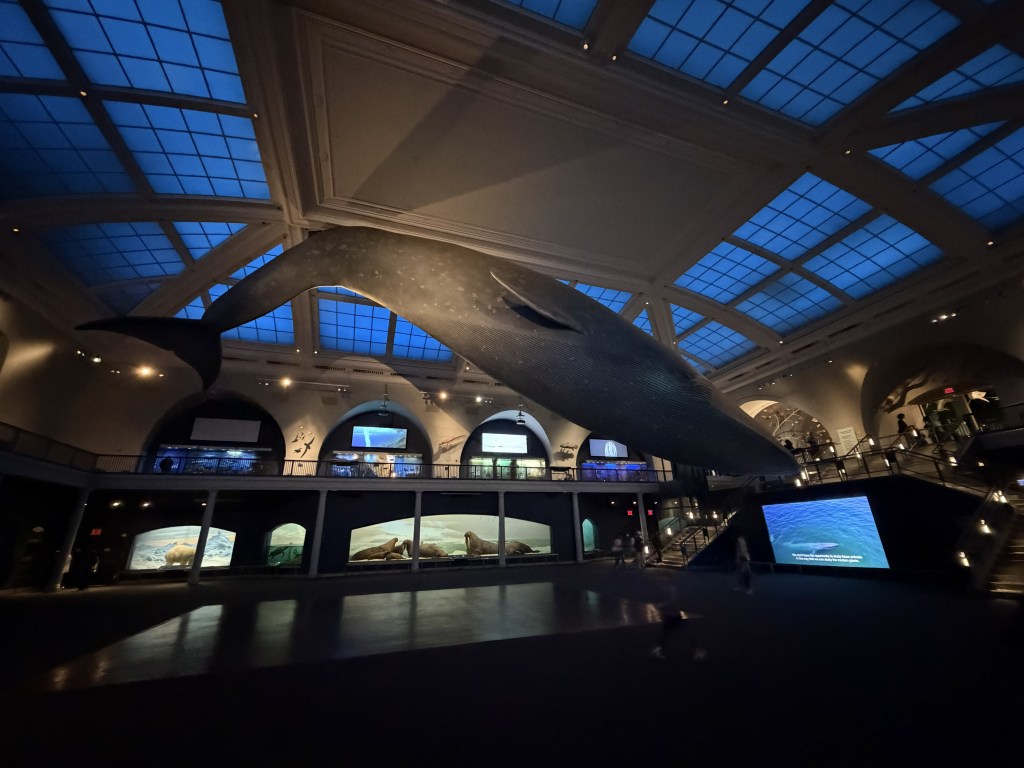
I stroll along the mezzanine level of the gallery, my boots silent on the carpet, taking a good long look at my old friend, the big blue whale. Suspended from the arched ceiling in simulated mid-swim, this giant will never fail to impress me. A bench beneath a model of a, relatively, small squid with razor-sharp tentacles beckons me toward it. I oblige, already sure my feet will be giving me hassle by the time the day’s exploring is through. That’s what poor planning will do though, what coming on a whim to a sprawling museum in New York City in inappropriate shoes will do, that is.
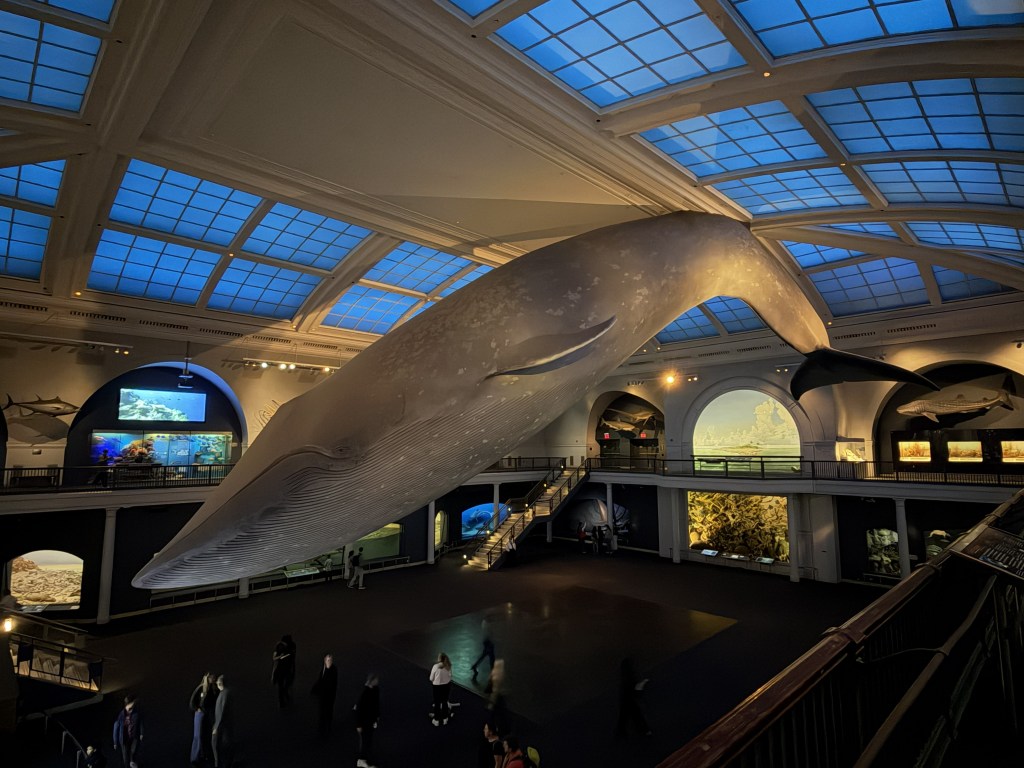
I take my time sitting here on the squid’s bench, with the whale for company. I make wary eye contact, my imagination immersing us both in the ocean with the help of the muted lighting and the adventurous soundscape emanating from the speakers nearby. You look tired today old friend, I think, but maybe I’m just projecting.
A mom walks past with her little kids. “Ooh, look at the jellyfish!” she says to her daughter.
To be small and full of imagination in such a place of many wonders as this one. One of life’s greatest adventures, to be sure.
I abandon my bench after a while and visit the Antarctic Ocean Bottom diorama nearby which houses the aforementioned jellyfish, which is enormous. I read that due to the extreme cold temperatures and slower metabolisms, creatures living in this environment can grow to be many times larger and live many times longer than their warm water counter parts. For instance, a sea spider which may be invisible to the naked eye in a coral reef environment, could be the size of a dinner plate in Antarctic waters. Fun.
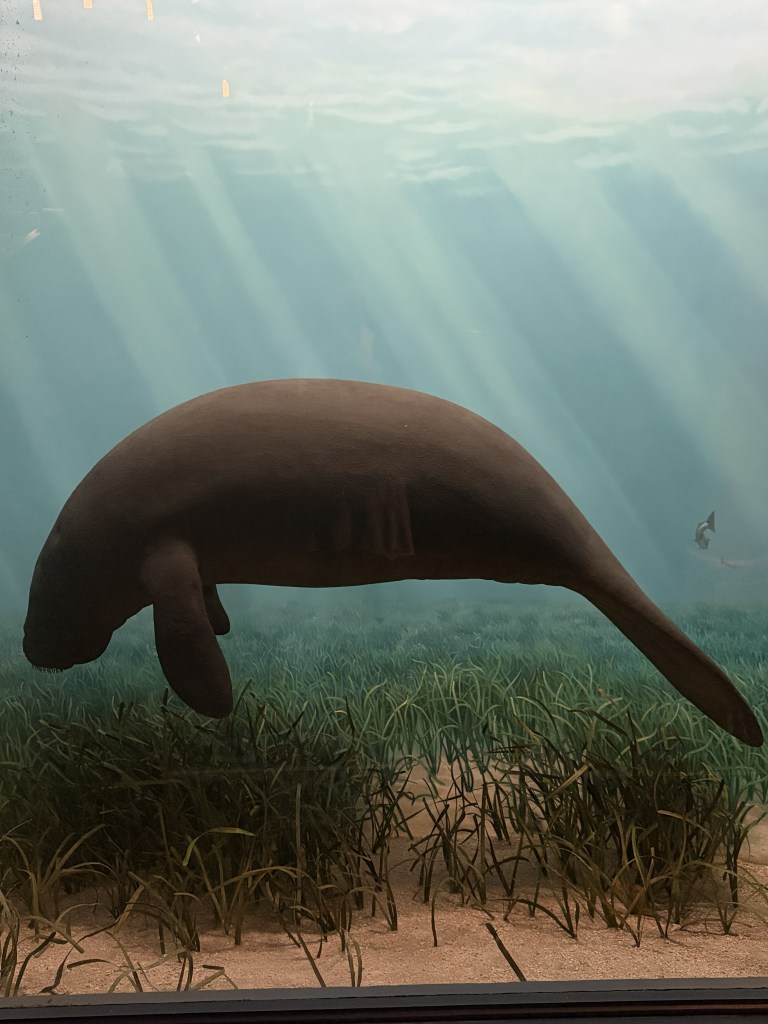
My eyes dart to Big Blue every couple of minutes. My mission is to take my time with the place on this visit. I complete the mezzanine loop and head down the stairs to the lower gallery. The manatee draws me in, my spirit animal, as Mike and I have joked in the past.
I pause at each display on my way to join a small crowd that has formed in the back corner, where a museum staff member is shining a flashlight on a dark, glassless display case. The Squid and the Whale. The scene portrays a fight to the death in the dark depths of the ocean. I’m happy not to have to stand here by myself.
Before heading onto my next stop, which is yet to be determined, a video on a large screen grabs my attention. It is about blue whales and how these creatures, the most massive animals living on the planet today, are able to thrive because of their efficiency in feeding. I learn that the lines on the creatures throat mark an expandable pouch that they fill with water and prey as they swim, unable to take another mouthful until the water filters out and they have swallowed back their meal. I wouldn’t want to find myself too near one in the ocean, I decide. With one last wary look, I move on.
I’m working my way up to facing a particular display case in the Hall of Biodiversity, but I’m not ready just yet. Instead, I wander past the magnified Life of the Forest Floor display that used to terrify me as a kid with its giant millipede, daddy long legs, and ant, each enlarged to 24 times their natural size, and into The North American Forests permanent exhibit. This one has never really captivated my attention until now. There’s a first time for everything though.
I explore the intricate forest dioramas, sweeping my gaze between the tree trunks, the wild brush and along the forest floor, up into the branches that hide little elusive creatures, and to the painted backdrops beyond. I take a seat on a wooden bench beside a diorama depicting a Northern Spruce and Fir environment, a safe distance from a mosquito that is attempting to rival the creatures in the Antarctic Ocean Bottom case in its enormity.
Sitting here, among the trees, I feel a sense of calm. I look up and spot a marten in the branches and remember a Scottish Highlands episode of Escape to the Country which I’ve watched more times than is socially acceptable probably. I am living in my head and I am at peace with it.
I wind through the rest of the exhibit. Two women are reading half of a plaque that pertains to a gargantuan slice of a Giant Sequoia’s trunk on display.
“This tree is a thousand years old,” one says with awe, “Amazing.”
I read the plaque when they are gone and two more women come up.
“It’s all about the rings,” says one to the other. She’s out of breath from rushing about.
Circle, circle, circle. Tap, tap, says her finger decisively on the picture on the plaque before she darts on to whatever she plans to breeze through next, not noticing that encased along with the description of the sequoia is a slice of a much smaller tree trunk that was 1500 years old when it was cut.
I decide the meteorite room doesn’t have the same nostalgia pull for me since the museum redid it, changing the fun, carpeted stair pit that once was a makeshift playground in my childhood to a more refined gallery space befitting of the bright gems it houses within. It can wait till next time, I think.
There’s a more pressing matter at hand for now. It’s time to face a big fear of mine… in the wimpiest way I can think of.
On my last visit to the museum, as I looked among the massive backlit wall of shadowbox displays of crabs, lobsters, and insects in the Hall of Biodiversity, I should have expected the spiders. As soon as my eyes processed what they were seeing, imposing hairy creatures the size of my hands, girthy bulbous bodies sprouting with legs and fuzzy pincers, I could hear my pulse in my ears, feel the pounding in my chest, the sweat dampening my hairline at the back of my neck. I felt the static heat of irrational panic and hurried away.
Not this time.
Guarded by a full-sized tiger for protection, I look from far away at first, shortening the distance little by little until I am about three feet away from the case. I do not look away this time. I focus on my breathing. I read the plaque on chelicerates and am interested to learn that horseshoe crabs, a creature of which I have no fear, are more closely related to spiders than to crabs. I imagine how I’d feel if the hand-sized spiders were moving and my heartbeat quickens.
This DIY exposure therapy is necessary in my mind as my phobia is threatening to keep me from experiencing an important life experience, the upcoming wedding of two friends in South America where there is a non-zero chance of seeing a spider of substantial size. There is a much greater chance of me not being able to sleep due to my irrational fear, both during the trip and leading up to it, so I need to learn to face this before it potentially gets worse.
I leave the spiders when I am ready to move on, pleased enough for now with my brain’s ability to prevent itself from overriding my nervous system to the point of complete uselessness. I remind myself that allowing fear to dictate life can lead to missing out on experiences that enrich and enhance it. I’ve decided I’m not willing to let fear rob me of living fully, of living well.
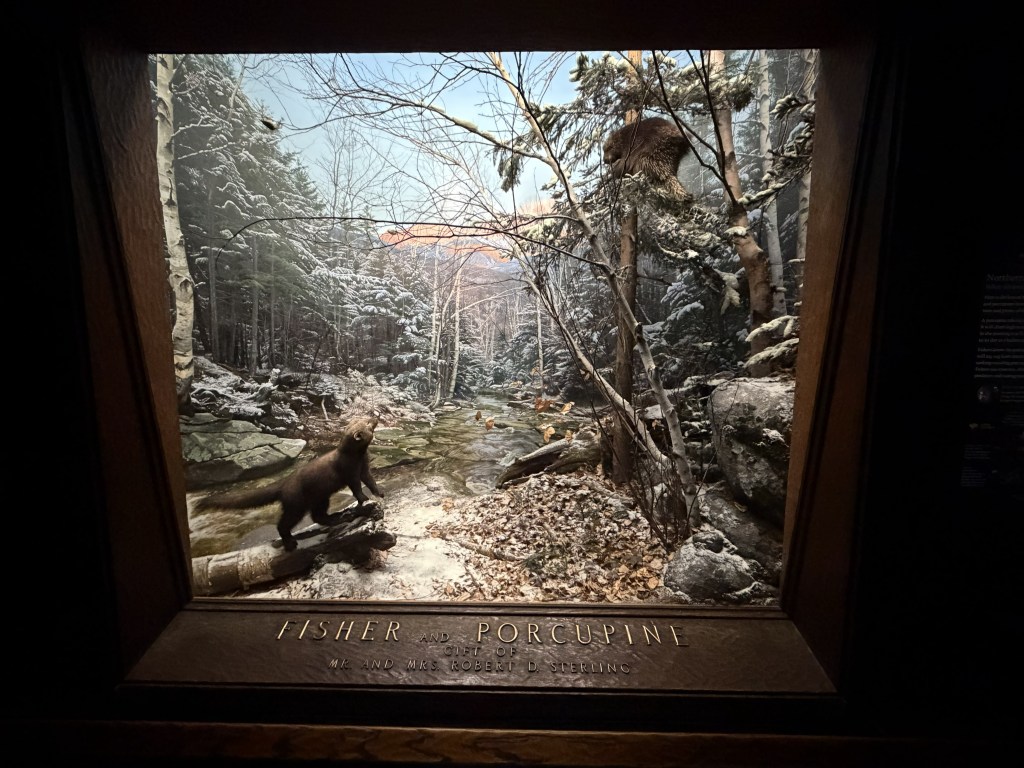
The North American Mammals exhibit calls me next. The wolves and the brown bears, the grizzlies, and the buffalo. I pause by the diorama titled Fisher and Porcupine, recalling the time this summer when Mike and I saw a family of fishers while hiking the Mt. Tammany trail. The plaque tells me that the porcupine is the fisher’s favorite meal. Seems like it’s probably an acquired taste.
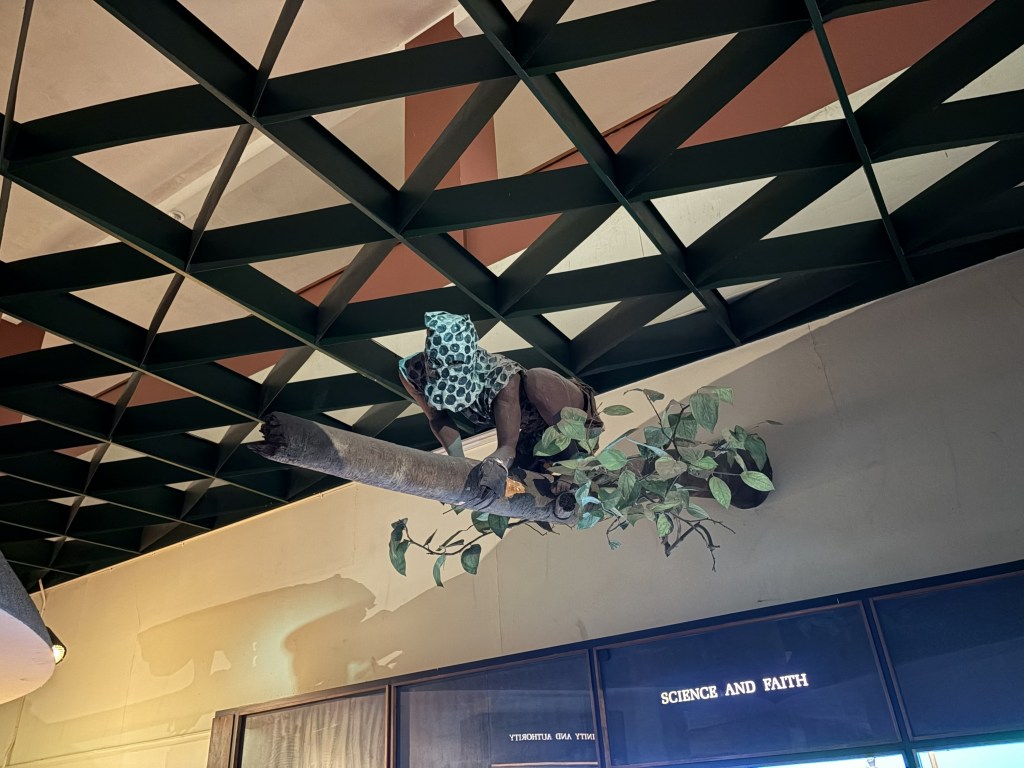
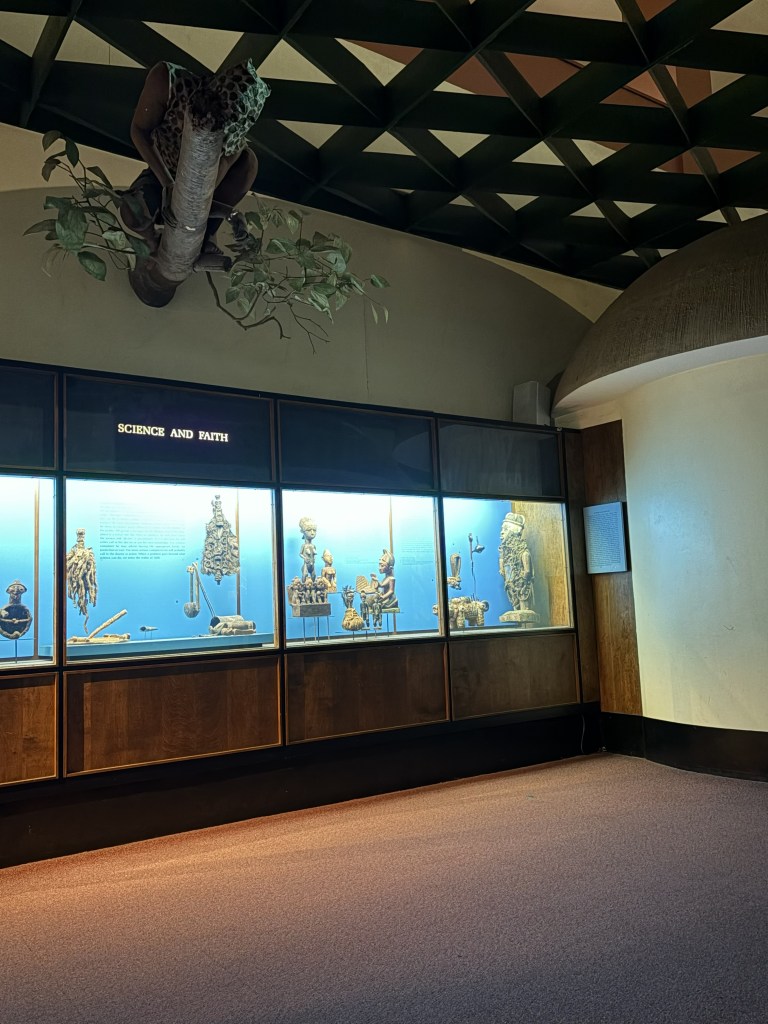
I wander upstairs to the Hall of African Peoples to face a former fear that I have already overcome. My feet aren’t aching yet, but I park myself on a bench near a case entitled Science and Faith. People come and go from this dark little alcove of the exhibit, glancing at the glass case of artifacts with half interest before moving on. I watch them as they do not think to look up, where, just above their heads is a life-sized diorama of a man in a trance, perched on the limb of a tree, his face shrouded in the skin of a leopard, the whites of his eyes shining through, as he fixes his perpetual sights on his unsuspecting prey, below.
I first noticed The Leopard Man on a visit to the museum in my early twenties. I had been to the museum multiple times before on trips with my family or school or summer camp. Never before had the man perched on the limb caught my attention. When he finally did, it scared the Hell out of me.
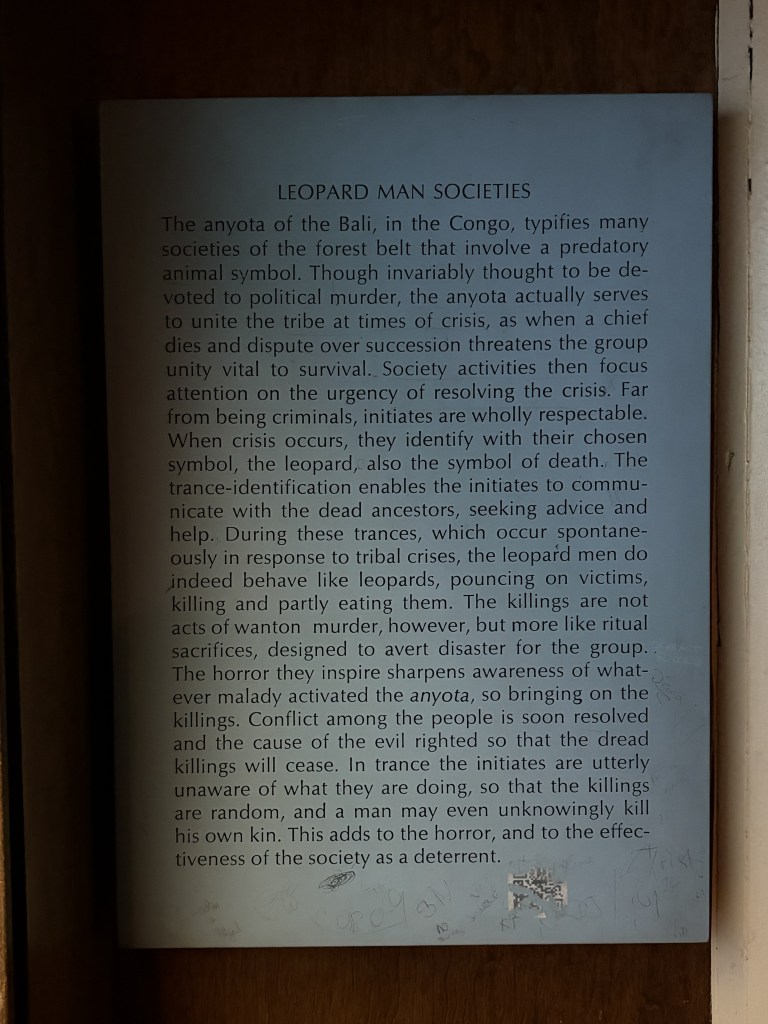
Reading the Leopard Man Societies information plaque on the wall offers no comfort. To summarize the description on the plaque, the practice of Leopard Man Societies was born in response to times of tribal crisis. The members of this secret, esteemed, anyota (Leopard Society) would enter into dissociative trances as a means of communicating with the spirits of their ancestors for guidance. During these trances, they would adopt the behavior of leopards, an animal representative of death in the community of the Baali people of the Congo, attacking random victims from above and cannibalizing them as a ritual sacrifice to ward off conflict and avert disaster for the tribe.
As I sit on my bench, I wonder if any of the passing visitors will look up, but no one does. On my previous visit, a few women had parked their strollers beneath this diorama and tried to soothe and shush their babies as the babies wailed. They were completely unaware of the predator perched just above.
I bid farewell to The Leopard Man and continue on, following my intuition as it guides me up to the third floor and down a bare corridor to the Hall of Pacific Peoples. I pause briefly on my way in to listen to Barbara Walters singing the praises on a small screen of someone named Margaret Mead before perusing the exhibit.
The speakers in this exhibit pump out a soundscape of instruments and songs traditional of various rural communities in the Pacific Islands. I attempt to read a plaque beside a replica of an Easter Island Moai statue’s head, but there is a clump of people waiting to take pictures with the statue so I can’t get close enough. I loop around the back of the Moai and stop by a case on the other side, recognizing a black and white photo that was shown in the video on the small screen at the entrance to the exhibit. Margaret Mead as a budding anthropologist on her first field visit to Samoa in 1926, clad in traditional ceremonial dress.
I decide I am fascinated by this twenty-three year old anthropologist’s determination to travel to Samoa in 1925 and observe of the lives of its people for the purpose of better understanding Americans’ place within their own culture when it came to child rearing and young adult advancement. I pull up my library app and request three books to read more about her life and her wave-making first study, Coming of Age in Samoa.
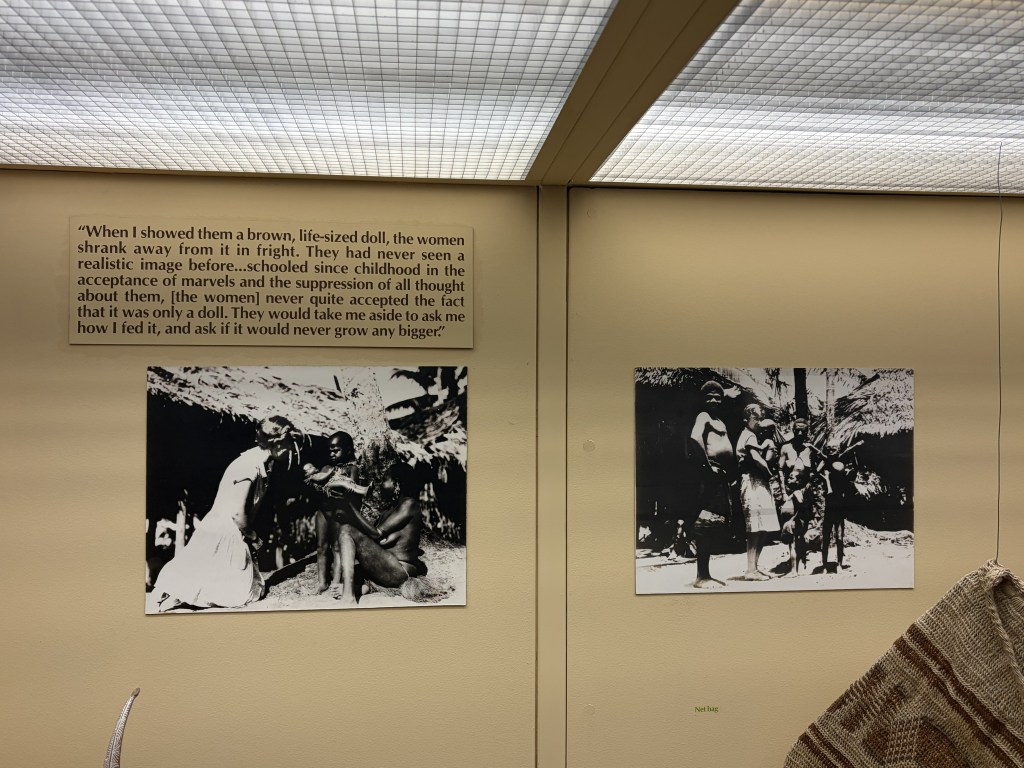
I watch the whole video on Margaret Mead before heading out of the exhibit, but I do not leave her behind. She is going to be the primary source of resonance from my day’s adventure, I can already tell.
I backtrack to the Mexico and Central America exhibit, then the South American Peoples exhibit. My feet are aching and my steps have slowed. I have been here for over two hours, about my usual museum quota for a day.
The park is whispering through the walls from across the street, with its collection of meandering paths, towering trees, birds, lakes, explorers and inviting reading benches.
I wind my way back to The Rotunda and take a last look at the towering Barosaurus skeleton replica on display before heading out into the sunshine and across the street to Central Park where the trees and the animals are living, where the people-watching is abundant and accessible, and where the air feels as fresh as it gets in the city that never sleeps.
I leave behind the fossils and the dioramas, the Moai and The Leopard Man, the spiders and the big blue whale, carrying only intrigue of Margaret Mead and her adventurous spirit with me as my sole souvenir from my day’s adventure in the place of many wonders.

