Health & Lifestyle · Mental Health · Minimalism · Poetry

Shopping My Closet

I’ve been shedding bits of myself lately-

Discarding layers

Like pilled sweaters and torn jeans in a heap on the floor,

Too careless to aim for the hamper

And call them as they are-

Pieces in need of care and mending.

Sometimes I’ll pick part of me back up and wear it again,

Beyond acceptable condition of wearability.

A muddy thought.

A wrinkled smile.

A stained mindset.

And it just doesn’t look right somehow.

And then I realize that I packed away the appropriate wearables months ago,

Vacuum sealed in a Small Space Bag 

In a plastic bin from Target.

I open the bin

And see the love, friends, hobbies, memories, and plans shriveled up like raisins packed for space rations.

I open the bag and they puff up into grapes again,

Turned with the chemical perfume of storage.

I wash my wearables

And extra spin so they look their best.

I slide into a brightly colored memory,

A cotton blend of calm and nostalgia that allows room to breathe.

I am me once again,

Happy thoughts folded in the drawers

where I can reach them,

The hamper and floor – empty,

Ready to collect me 

When I am over worn.

Health & Lifestyle · Mental Health · Minimalism

The Bully in your Closet

Growing up, I often had negative perceptions about my body and it took me a really long time to love the way that I look. I hate to admit it, but I still have negative body image perceptions sometimes, though much less frequently. An unexpected side effect of creating a more minimalist wardrobe was learning how to identify some of the triggers for these negative thoughts.

One of my big triggers is aspirational clothing lurking in my dresser or closet – those jeans that fit perfectly everywhere but are so tight in the waist that they inhibit digestion, that blouse that gaps in the front no matter how I safety pin it, or the halter dress that highlights my armpit squishies. I find myself thinking, if I only lost some weight, I could fit into these items comfortably and if I can fit into these items comfortably, then I will be beautiful; I will be enough.

What I have found the truth to be is that when I have lost the weight to be able to fit into aspirational clothing, it has only lasted temporarily and that for that temporary duration, I have been in a state of perpetual hangriness. Starving your way to aspirational clothing also means that all of your other clothes that you wear often and that make you feel good and beautiful would then be too big. Why sacrifice feeling good in a majority of your wardrobe just to feel good in a couple of items that drained so much of your self-worth for so long? Get those items out of sight. The trade off makes no sense to me now and I only wish I had realized it sooner.

When I come across aspirational clothing in my closet, it takes guts to confront the bully hidden in the waistline, zipper, or buttons down the front. I find that I allow my aspirational clothing to put me down for a while before I even notice that it is draining positivity from my daily routine of getting dressed. Once I realize, I work past the guilt of the purchase or the time that it has spent in my dresser or closet, and recognize that I have learned a valuable lesson from it about what does not support my body and mindset well. Then, I confront the item and the emotions attached and oust it to the donation pile. Good riddance!

As a teenager, cultural representations of beauty really fucked with my self esteem. I used to collect Vogue magazine and thought that being beautiful meant being stick thin. My body doesn’t get stick thin. I’m not proud to say it, but I tried very hard to test and disprove this theory. I remember an influential quote of Kate Moss’ from when I was a teenager, “Nothing tastes as good as skinny feels,” and now, to that, I say, have you tried the Lindt 78% dark chocolate yet? It tastes better than skinny feels, to me.

I started learning to love my body in college when I was studying art. I took a life drawing class my senior year which involved drawing nude models. These models came in all shapes, sizes, colors, ages, and genders. At the end of class, we would walk around the studio to look at the interpretations of the model and it was fascinating to see the variance in the drawings from easel to easel.

Some students drew the models with ideal proportions and some drawings were more abstract, despite us all having learned how to establish proportions and perspective from life to paper. I learned to see the human body as marks on paper, as shapes, shadow, light, and negative space. Even more fascinating was how most of the models seemed completely comfortable wearing nothing, standing on a platform in the middle of a circle of easels and watchful eyes. There was no judgement in the art studio. There simply was no time for it when the professor quickly increased the time of the different poses from thirty-seconds to two-minutes to ten-minutes and on to twenty. The body became scratches of charcoal or pencil on paper and together, those scratches created something beautiful and unique.

My pared down wardrobe has taught me what I enjoy wearing and how my clothes can impact my mood and mental health. When I open my closet, I see color, texture, patterns, prints, and shine. I smile when I get dressed in the morning because I know that my closet it mostly full of clothes that support me in being the best version of myself for whatever that means today. And when I come across something that does not serve that basic function, I thank it for the lesson and say goodbye.

There is no perfect body type. Beauty comes in an endless variety of forms and your form is included in that spectrum; I am absolutely certain of this. If you are struggling with negative body image, you are not alone, and it can feel impossible to feel like you are beautiful and enough, but know that you are. It is difficult to accept others telling you that you are beautiful until you are able to embrace it yourself. 

Aim to be healthy, not just measured by a number on a scale, but in a way that supports your mental health too. And for the love of all that is good in this world, do it for yourself and your loved ones and try not to let the bullies of social media, pop-culture, or your aspirational clothing dictate what is enough.

Minimalism

Hard Learned Lessons: Clothing & Accessories

When I took the first step to removing my clutter in order to make room for the important things in my life, the most overwhelming question confronted me right from the get go as I looked around my seemingly never-ending, hopeless collection of things. Where do I start? As I have since learned that many new to the process of decluttering do, I began with my clothes and accessories.

I’ll try to draw up an image of my clothing and accessory collection prior to starting this journey. This is going to be a bit cringe-worthy for me, but it is important to lay it all out for this post, so here we go!

In our Williamsburg apartment, my husband and I shared a closet. The closet had a small organization system of racks and shelves built into it, though organized was far from how I would describe it. Mike had one neatly organized bar for his work clothes and I had two… and the shelves… for my closet collection. The weight capacity of each of my hangers was tested, some to the breaking point, almost each one holding two items (or more-yikes!).

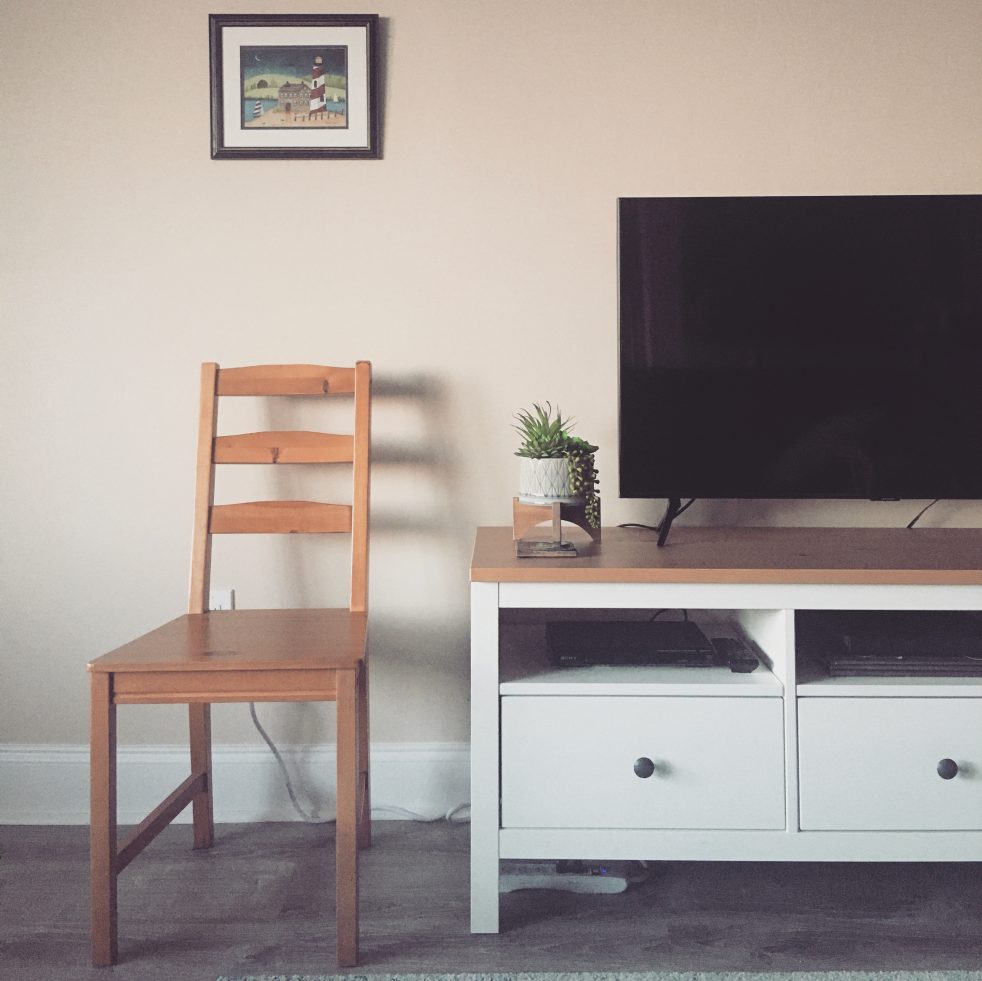
My Hemnes dresser from Ikea (not a plug- just want to convey how large of a dresser it is) was packed, each drawer brimming over the top such that I had to squish down the contents to close the drawers. Countless shirts, sweaters, skirts, pants, jeans, leggings, scarves, hats, gloves, swimsuits, sweatshirts- some items folded, but most haplessly crumpled due to my having tried on multiple outfits in the morning to find something acceptable to put on my body.

Draped on the chair by my sewing table were usually the clean parts of my outfits from the previous few days along with other pieces from “tired frenzy – the morning collection” that didn’t make the cut.

In the corner of the room lurked my large storage bin filled with seasonal items and clothes that didn’t fit or that I did not enjoy wearing but had paid good money for and so needed to be kept (but kept hidden and unused), right? On top of the bin, as mentioned in my first post, Finding Minimalism, lived my extensive collection of handbags, totes, backpacks, and soft-sided luggage, an addiction born from working in the NYC Midtown sales world of handbags for nearly two years. Just now I tried to think of all the bags I used to own and came up with the list below and I know this is likely not even all of them…

5 totes: 1x leather, 3x faux leather, 1xcanvas/leather

6 backpacks: 2x nylon, 2x canvas, 1x faux leather, 1x cotton twill

8 crossbodies: 2x leather, 2x nylon, 3x faux leather, 1x suede

3 evening bags: blue, black, gray

5 wallets: 4x faux leather, 1x leather

That’s 27 handbags / wallets. Twenty-seven. Ugh. I did not even include grocery totes and canvas tote bags or the main bags that I use today which I purchased in my early days of minimalism, a black canvas and leather crossbody, and my black “ebags” travel backpack.

I’m a monster.

Okay, moving on.

In front of the bin were at least two white kitchen trash bags stretching at the seams with clothes I was silly enough to think I could sell at Buffalo Exchange, a trendy consignment store in my neighborhood. After my first humiliating attempt to sell my items at Buffalo Exchange, I learned that they only take really nice or really unique stuff and you stand there as the in-store buyer sorts through your prized junk that you paid good money for. It was lucky if they took one thing for a pittance of a price but usually they just pushed most of the hoard back across the counter for me to awkwardly stuff back into the trash bags in front of the line of hopeful fashionistas waiting behind me to sell their last-season designer items.

After lugging my un-sellable stuff to and from Buffalo Exchange and Beacon’s Closet (another consignment shop in Williamsburg) countless times, I always felt drained and a little embarrassed. After donating to Salvation Army and Goodwill or dropping off my textile recyclables in H&M’s recycling bins, I always felt lighter- a weight off my shoulders- the cycle complete.

This lesson was one that, oddly enough, took a couple of years for me to learn and one that led to me donating many of my clothes and recycling the worse for wear ones instead of trying to sell them because it made me feel happier to do it that way. My clothes no longer had the same value to me as the price I paid for them, but I wanted to send them off in a way that was positive for my own mental health.

The hard lesson was learning that getting rid of my clothing items did not mean that those items never provided me value. The value of those items was in the distraction from stress or impulsive joy of the shopping experience, even if those items hung in my closet for years with the tags on. Their value lay in teaching me what does not work with my body shape or the type of fabrics and cuts that make me self-conscious, itchy, or feel just generally uncomfortable in. You don’t need those uncomfortable reminders in your closet staring you in the face everyday as you go to choose an outfit. You are enough whether that skirt makes you look a little chubsy or whether that dress caused someone to offer you their seat on the subway (cough- just chubby-not pregnant- oh the shame).

I wish I had written down how I initially approached deciding what to part with from my clothing hoard as I am having trouble remembering. I definitely did not know at that time about the KonMari method of putting all of your clothing items on the bed and holding each item one by one to see if it sparked joy (though experimented with this sometime later). I know that however I did it, it was little by little, two plastic grocery bags at a time, and I know that if you want to and put your brave face on, you can do it too.