Books · Cozy Posts · Reviews & Reflections

Tolkien Takeaways

I’ve been reading a lot of Tolkien this year, among other authors, and can say he offers an escape worthy of the time and brainpower it takes to digest his world-building, maps, pronunciation guides, timelines, and versatile storytelling formats. I’d never read Tolkien’s works before, but I’d seen the Peter Jackson – helmed The Lord of the Rings films and decided to attempt the feat of pouring my eyeballs over the entire epic journey of the ring bearer and his companions in written format from start to finish, and then some.

I spent many cold, winter mornings and evenings curled up on our blue couch, or in a chair by the window, my toes cozy with the warmth provided by the baseboard heater. I’d toss a throw blanket over my lap, my steaming mug of tea or coffee or glass of red wine – close at hand, getting safely lost in the pages of a very dangerous and complicated fictional world. Let’s just say if your brain’s at risk of turning into mashed potatoes, just read through a Tolkien Appendix or “The Battle of Unnumbered Tears” chapter in The Children of Hurin and you’ll be sorted for at least a little while.

I started with The Hobbit, a prequel to “the trilogy”, after seeking the advice of a friend. As the story began, I met a Tookish hobbit named Bilbo Baggins who both craved adventure and was resistant to it. I recognized such a personality immediately, sharing in these traits myself. I joined Bilbo, Gandalf, and a company of rhyme-named, treasure-minded dwarves on a romp through parts of Middle-earth from West to East, from The Shire to Erebor, a.k.a. The Lonely Mountain.

I tasted adventure and couldn’t get enough. The names became easier to differentiate and the characters came to life in my mind. I read of trolls, a victory of wits, a rank cave of treasures, and the last homely house in Rivendell. I tensed as wargs and goblins pursued Thorin and his company. I soared to eyries on eagles’ backs and trekked through the endless darkness of Mirkwood, cowering beneath Shelob’s (chatty) spider-spawn and grew intrigued yet suspicious of vanishing, feasting wood elves. I cautioned my thirst at magical streams and hid behind Bilbo as he sweet talked a cunning dragon called Smaug. It all made real life feel a little easier, not having to face those trials first-hand. It made reading “the trilogy” a little easier too.

My Preciouses

It was helpful to come to The Fellowship of the Ring with a lay of the land, to some degree (a familiarity with the films was a helpful crutch as well). Middle-earth is a vast realm and only seems to increase in size the more Tolkien stories I read. The first book of the trilogy fleshed out the maps introduced in The Hobbit. The journey started as The Hobbit had, in the familiarity and comfort of The Shire in the most eastern lands of the old West, with my old, new friend, Bilbo. What ensued was a journey of nothing less than epic proportions, a fantastic escape like a fever dream that lasted over a month and was disappointing to wake from.

I learned that Bilbo’s ring was more than just an invisibility cloak that he employed as a party trick or escape tactic. I learned that The Shire was not exempt from the dangers of the East, as it seemed in The Hobbit, those dangers held at bay by protective, mysterious rangers, men of the sunken West. I met a mischievous, ravenous tree, and was relieved, yet wary, at the rescue of Frodo’s companions by Tom Bombadil, the yellow-booted “master of the land”, who simply is and his wife, Goldberry, the river-daughter, surrounded by bowls of flowers in their cozy respite of a home. As Frodo, Sam, Merry, and Pippin evaded a few of “The Nine” hooded riders on horseback, relief washed over me again, followed by intrigue at the introduction of the mysterious ranger, Strider, in the Prancing Pony tavern who would come to be their guide, protector, and a major power-player in Tolkien’s complicated tale.

The journey continued on, presenting harrowing scrapes with danger, a slightly altered cast of characters from the film adaption, and what seemed like a lot of songs. Tolkien is a poet who expertly plays with words and inserts poetry into prose in a way that adds meat to the story while also explaining some of the history that is helpful to understand the state of things in the “First Age” and “Second Age” of Middle-earth a little better and to bolster the current affairs in the “Third Age” in which the story takes place. His poems sing and while the music probably sounded different in my mind than in his ear, there were indeed the makings of a melody.

Tolkien creates new languages on the basis of existing language foundations and principles, some even possible to learn if you have the interest, patience, and time. I think, personally, I’ll just stick to my Duolingo French for the time being.

Tolkien establishes relationships in the first book of the trilogy as well as an overwhelming sense of obligation, empathy, trust, and apprehension among the shepherds of the ring. Every surety is tested until it is unsure. Curiosity overwhelms and havoc ensues in the form of orc attacks and Balrog-induced cliff-hangers. There is heartbreaking loss, but temporary safety is often a close-following companion.

And then there’s Lorien.

A land of the elves, concealed amid the treetops, a place almost too glorious for human understanding, that none but Tolkien could invent and convey with his magic words.

I went out to buy the next two books before I finished reading The Fellowship.

Funny thing, when you purchase a Lord of the Rings book, it seems to serve as a guaranteed conversation-starter with the bookstore cashier. When buying The Fellowship of the Ring at Labyrinth Books in Princeton, I smiled when the cashier felt compelled to share that Andy Serkis recently narrated a new audio book adaption of The Fellowship of the Ring, just assuming I knew who Andy Serkis was while providing no additional info and ignoring the fact that I was literally handing him my credit card for a paperback copy at that very moment. Luckily, I did know who Andy Serkis was and was able to offer some sort of interested response, because it is my firmly held belief that Andy Serkis was perhaps born with the main purpose of bringing Gollum/Smeagol to life in the LOTR film franchise.

When I bought The Two Towers and The Return of the King at Barnes and Noble, I was met with an, “Awwww; Lord of the Rings! My dad used to read those books to me when I was a kid.” And that’s connection right there, people. I can attest that the secret network of Tolkien fandom is alive and well.

If I read these books as a child, without seeing the movies, I wonder how much of Tolkien’s talent I would have actually appreciated as I floundered to grasp names and races and languages and maps and quarter-turned, counter-clockwise, rotated geography for over a thousand pages. I’d have sunk like the lands in the West, for sure. No, adulthood was necessary, for this reader at least.

I finished The Fellowship and immediately went on to The Two Towers, impatient for the adventure to continue.

If you’re looking for orcs, don’t you worry. They are served up in heaping portions in The Two Towers. I read on, worried as the Fellowship separated due to the divided fates of the young hobbits. I mourned a fallen ally on the banks of the Anduin. My skin itched at the sight of two glowing orbs in the darkness and ice trickled down my spine as Gollum/Smeagol led Frodo and Sam through the Dead Marshes, the description of the faces in the bog and the thought of their cold, flacid skin, vivid as touch in my mind.

I’d walk through my local woods and recognize The Shire in the hill of the Battery, Moria in the Battery bunkers, and the Anduin in the river below. Lorien gleamed in the early morning sunlight, golden on the leaves, while Mirkwood lurked in the fading dusk, ominous with each rustling that broke the static, blue silence. Fangorn was present in the strength of the trees and Isengard invaded where trunks had been felled for restoration. There is no Mordor here, however, and the map is reversed, the lands in the West – now in the East, sunken in the sea.

I dreamed of battle encampment, my imagination hyper-activated in sleep, and the sure menace of orcs and probable doom lying in wait. I didn’t feel ready for certain defeat and stressed over having never wielded a real sword. I didn’t have the courage of the ring bearer and his company. Cold sweat woke me. Disorientation overwhelmed as I fumbled for glasses on my nightstand in the dark, slowly coming to sharpened reality. I reserved my battle-cry for next time, ultimately fading back into a safer dream, shielded by a warm quilt, soft sheets, and safe shelter, a world away from the battles of the Third Age.

Shelob was absolutely horrifying and made me realize that Samwise is perhaps the truest hero in Tolkien’s epic tale for the challenges that his creator constructed for him. (Pro tip! Don’t Google Shelob if you are afraid of spiders.)

Another cliff-hanger ushered me straight into The Return of the King and I found my favorite of Tolkien’s books, so far at least. I really think it would be a tough one to beat, however. The storytelling in this book is more well done than a steak at Chili’s. The way Tolkien unfolded simultaneous events, devoting appropriate attention to each battle, escape, and rescue, all while keeping the story going and maintaining the quality of the character relationships fed a glow of admiration within me. I know I won’t ever equal storytelling like that, but I felt lucky to read storytelling like that and that’s enough for me, I think. We’ll see.

A culminative battle brewed as the fate of the bearer hung uncertain in the hearts of his scattered company. The forces of men, elves, dwarves, wizards and a couple of brave hobbits combined to fight a growing, visible darkness. Dread prickled my scalp as a small company braved the kingdom of the dead on blind trust of their leader, he – destined to rule in an age to come. My heart pattered in the Houses of Healing in Minas Tirith, melted in the fiery waste of Mount Doom, and soared in flight with the eagles, once again. I almost wished it had ended there and to never have known The Shire touched by darkness, but then Merry and Pippin would not have felt themselves worthy of the title of hero in the end, each earning it gloriously, like their other hobbit companions.

Tolkien tugged a few remaining threads on the seams of the story and just like that, it was finished.

I craved the first page and the unknowing mind again. Instead, I sifted through timelines and appendices and that satisfied, for the time being.

Tolkien is a tutor for what language is capable of, what the creative mind is capable of, and the influence a great creative mind can have on other artists, readers, and adventure seekers. Tolkien’s epic storytelling ability is an unreachable destination, a myth, lore – surely, right? And yet, it was achieved by a man of very human proportions (with a heavy dose of talent).

“What has [Tolkien] got in [his] pocketses?” as Gollum might ask.

Endless, gleaming brilliance, Precious; that’s what.

Books · Reviews & Reflections

“It’s the latest, it’s the greatest…”

I’m on a reading kick lately. Reading helps me to tune the buzzing static of my insecurities to the right station until I can sit back and analyze them with more clarity. I enjoy being a spectator to other people’s or characters’ stories for a while, particularly on rare days when I feel like a background character in my own. I overthink. I underthink. I misinterpret. I acquiesce to the harsh judgement that accompanies creative drain some days, goals crowning a mountain peak that seems to grow out of reach despite my efforts.

I pitch my hammock into the rockface and will it to hold so I can keep climbing once I’m rested. When I need a break from decision making, from world-building, from feelings of inadequacy, I pick up a book or my Kindle. When I read, the print on crisp pages takes the reins as my supply of curiosity and potential refill.

Until recently, I would buy books or borrow them from friends or family willing to lend them. I am a serial re-reader when it comes to books that I own and am careful in selecting books to purchase. I wait; I visit; I ask for advice. I will continue to buy books that mean something to me.

My shelves and Kindle are stocked with different genres: fantasy, historical fiction, murder mysteries, and a smattering of minimalism, wellness, and nostalgic childhood one-offs here and there. Books are my time machine. They transport me to different memories, different people, and I feel connected to those experiences and people again, even if they are not alive anymore or if we have simply lost touch.

To supplement my book buying practice, in the continual pursuit of living with less clutter, I finally visited my local public library branch. When I applied for my library card, the three staff members behind the circulation desk welcomed me to the area. I have lived in the area for four years. Let’s just say I didn’t admit that since there’s no excuse for it taking me as long as it did.

If you are a book lover without a library card, don’t hesitate like I did. It’s time, really.

Aside from being welcomed to the neighborhood when picking up my library card (I can only imagine the books will silently shame me forever for my transgression in waiting four years!), I was also serenaded by one of the librarians with this bad boy from 1967, perhaps more appropriately known as The Library Song written by, Fred Hertz and Joel Herron.

“There’s a place for you and a place for me,
it’s the local public library.
They have books and things that they lend for free
It’s the latest, it’s the greatest, it’s the library.

If I knew there’d be fanfare, I’d have gone sooner. 🙂

Wielding my new magic access card to hundreds of thousands of books across my county, I went “shopping” in the library, or at least, that’s what it felt like – and bonus, no buyer’s remorse! I keep a list of books that I want to read and suggestions from friends and family in my notes on my phone and it was so easy to peruse the library app to find the reference numbers and sections for the books on my list. I know! I’m late to the party and Hermione Granger is screaming at me right now somewhere in the fictional universe, but I don’t care, because I’ve finally made it. I was excited to walk out of the building with two adventures in my hands and the promise of many more ahead of me, all for the nice round price of zero dollars. In the words of Will Hunting, “How you like them apples?”

With this lifeline nearby, its shelves of plastic-sheathed, coded offerings waiting to be read and re-read, I feel calm and excited, only overwhelmed by wanting to read more stories than I have time to read. I am determined to rekindle my relationship with the Dewey Decimal System, remembering now what a great pair we made throughout my school days all the way up through college. Absence makes the heart grow fonder, as they say, and I’ve fallen again. What else would you expect from a word nerd like me? Afterall, “It’s the latest, it’s the greatest, it’s the library.

Reviews & Reflections · Books · Movies · Mental Health

The Boy and Girl Who Lived

I first finished reading Harry Potter and the Sorcerer’s Stone when I was ten years old. It was the summer of 2002 and I was in need of ways to escape the organized chaos that was The Work Family Connection day camp. I had seen the first Harry Potter movie in the theatre when it came out in the fall of 2001 and was mesmerized by the magical world of JK Rowling’s imagination, brought to life by the cast, crew, writers, and artists involved with the film. It was “movie magic” in its truest form and I absolutely loved it.

The Work Family Connection’s summer camp was located in the basement-level cafeteria of Southern Boulevard School. The cafeteria had waxed, linoleum, tiled floors, beige and blue cinderblock walls, and it was where WFC’s before-school program was held during the year. I had spent a lot of time there and made most of my friends, at the time, at WFC and have retained few of them, unfortunately, after we each grew up and went our separate ways.

Rather than gossip with my friends or ask (pester?) the counselors for their worldly advice about what it was like to be “adults”, for a few days I preferred to sit alone at one of the cafeteria tables with my book. I flipped open my paperback and allowed myself to be swallowed whole by Harry and his story. I disappeared into the fragrant pages of an enchanted world hidden amongst the very real-world places of London and the Scottish Highlands. With ease, the words blocked out the cacophony of Nok-Hockey sticks smacking against a particle board rink as well as the generally loud nature of pre-pubescents who each have something on the tip of their tongue that is absolutely the most important thing you will ever hear, no like seriously guys.

My parents had tried to read Harry Potter and the Sorcerer’s Stone to me and my sister when we were younger, but either I or Katie (or both) couldn’t make it past Fluffy, the three-headed dog, a Cerberusesque creature, who guards a dangerous place full of enchanted obstacles and secrets much too dangerous for children.

If you have read the beloved series or watched the movies, you will realize that I was very close to Harry’s age at the time of the story and that I would soon turn eleven. Eleven is a pivotal age in JK Rowling’s fictional universe as it is the age at which young witches and wizards receive their Hogwarts letter. I, however, remember being petrified of turning eleven.

When I was nine, two of my best friends at WFC aftercare were reading from an anthology of scary stories and stopped abruptly after reading one line in particular. When I asked why they stopped, they looked at me with grim expressions and showed me a sentence in the book. The sentence prophesied that people born on my birthday would die in eleven years. It seems silly now, of course, but when you are nine and your best friends believe something as serious as this, even if only for a moment, you entertain the possibility that it could be true. In fact, you believe it to be. I- being nine and gullible, wondered with dread if I’d bite the big one at eleven or at twenty. I imagine neither of these friends remembered this traumatizing “prophecy” past that day, when they read the words in the book, but in many ways, this experience shaped me.

Harry Potter distracted me from my looming eleventh birthday and was there for me with the wave of relief brought on by my twelfth, having lived to tell the tale. Harry, who had already lived ten years longer than he was supposed to, at the time of the first book, was an exception to the rule, and so too, would I be, (and probably most people born on my birthday, for that matter). Sometimes, I wish I could travel back to that moment and give that nine year old girl a huge hug and let her know she’s got so much more time than she thinks she has. Thirty-two would have been an absolute dream for her, but let’s hope for even more borrowed time than that.

In Harry Potter and the Chamber of Secrets, I visited the Weasley family’s bustling home, The Burrow, for the first time. Though book two is my least favorite of the series, due to the heavy lean on spiders in the storytelling, I fell in love with the Burrow and the Weasley family instantly. The Burrow is the epitome of lived-in cozy. It started as a small house and over the years, as Molly and Arthur Weasley’s brood grew to seven children, new levels, rooms, and towers were magically added here and there. It is a house filled with personality, color, hand-me-downs, squashy furniture, and imperfect perfection. There is a quote from the second movie that is not in my edition of the book, where Ron says, “It’s not much, but it’s home,” and yet, it is so much more than he thinks, something that Harry recognizes the instant he lays eyes on Ron’s unique family home.

I continued on my journey with Harry and his friends, tagging along like Neville Longbottom, wanting to fit in and be part of the crew. Once I was twelve, and out of the proverbial forbidden forest of my looming death prophecy, I could just be a kid again. I continued reading, Harry Potter and the Prisoner of Azkaban then Harry Potter and the Goblet of Fire. I got happily lost in these stories and met creatures I could never have dreamed up myself, a spectator to Harry and his friends’ exciting lives and challenges.

I went to a book release party for Harry Potter and the Order of the Phoenix at our local Borders (RIP!) with two friends and we went back to my friend Meagan’s house for a sleepover afterwards. I couldn’t put that massive blue hardcover down. Neither could my friends. It was the quietest sleepover in the history of sleepovers and we were all having the best time.

I bought my copy of Harry Potter and the Half Blood Prince in the summer of 2005, the day after saying goodbye to a boy I had met who I really liked and who I would not see again for five years, when the door was firmly closed and deadbolted. I delved into my new book that hot summer, in need of my friends in JK Rowling’s world. I found a haven in Harry’s world, despite the darkening tone of the story and the trials lying in wait for Harry and his friends as the books progressed. I am grateful for that green book at that time in my early teen years when I really needed something to disappear into.

I then had two years to wait for book seven, Harry Potter and the Deathly Hallows, to be released. My cousin and I speculated what would happen to Harry in the final book and who would survive what was to come in his magical universe. When I got that book, I think I finished it in two or three days, holed up in a squashy blue armchair with mugs of microwaved French Vanilla tea, wedged in the little reading nook between my parents’ dressers whenever their room in our apartment was available. I learned about horcruxes and rooted for Harry and the Order’s victory over darkness. I bore witness to Severus Snape’s most heartfelt motivations and saw Harry become a little more human in recognizing them too. It was thrilling and heartbreaking and everything I had hoped it would be and more. And when I reached the final page, I wanted to start the whole thing all over again, as I had done after finishing each book.

Throughout his years at Hogwarts and beyond, Harry faces many harrowing experiences and has a responsibility to be brave. Always in tow are his truest friends, Ron and Hermione, to help him through the toughest bits. The Harry Potter stories teach the importance of creating a support system for children, both through friendships and mentorships. They encourage children to be imaginative, brave, and adventurous. They succeeded in teaching me these lessons, for which I will always be grateful. I truly grew up with this series and it has been there for me through the trickier years in my life. As Albus Dumbledore says in Harry Potter and The Prisoner of Azkaban, “Happiness can be found even in the darkest of times, if only one remembers to turn on the light.” When you are feeling lost or sad, try opening a portal to another world in the pages of a book and take a look around for a while to see if you find treasure there, as I did.

Thank you for reading this long post. If a particular book has had a big impact on you, I’d love to hear about it. Leave me a comment, if you’d like to share and happy reading! 🙂

Health & Lifestyle · Movies · Nostalgic Posts · Reviews & Reflections

Empty Venues

When I was fifteen, I had the honor of being invited to attend my twin friends’ extravagant sixteenth birthday celebration in New York City. My friends had chosen to take a group of us out to a nice dinner and a Broadway show and afterwards, we all had a slumber party at the Waldorf Astoria. We snacked on decadent Godiva, chocolate-covered strawberries and Twizzlers from Walgreens and once we were all sugared up, we wandered the halls of the historic hotel in search of adventure, movie filming locations, and a ghost girl with a red balloon.

We never did find the ghost girl, but we rode the elevators like John Cusack and Kate Beckinsale in Serendipity (2001) and roamed the glamorous lobby in our hotel slippers and pajamas. I remember wandering into the empty Grand Ballroom, a cavernous hall with box seating all around the walls and a massive, glittering, chandelier overhead, illuminating the room in a dimmed glow.

We walked up onto the stage and looked out at the room, each with a feeling that it was exactly where we were all supposed to be at that exact moment in time. Aside from the Waldorf already having established itself for its serendipitous traits in Peter Chelsom and Marc Klein’s movie, it was something else to feel it for ourselves.

We looked out at the spotless ballroom, the banquet tables and chairs stored away in some closet or basement, the red patterned carpet – vacuumed, and the wooden dance floor – waxed and shining. We were the only things in the room to fill the space, a group of teenaged girls, our souls and energy so immense in the company of each other that the wallpapered walls and towering ceiling could hardly contain us.

I feel very alive in an empty venue. Perhaps it is the minimalist in me or perhaps the possibility that empty venues hold or once held. More likely, it is my love of Cameron Crowe’s movies and the impact they had on my adolescence, namely Almost Famous (2000) and Elizabethtown (2005).

Cameron Crowe has a talent for creating flawed, loveable, relatable characters and for developing relationships between them. He is also able to give empty venues as much life as full ones. His movies push me out to the stars and bring me safely back to the ground with each watch.

My favorite scene in Almost Famous depicts Kate Hudson’s character, Penny Lane, dancing around the floor of an empty concert venue after a Stillwater show has ended. The scene is set to Cat Stevens’ The Wind and captures the sense of clinging to something special extra hard when you don’t want it to end and the melancholy of accepting the fleeting nature of the experience once it’s over. The stage lights glow golden on the wooden floor as Penny slides around the venue alone, balancing on discarded cocktail napkins, while gracefully swinging a single rose around in her hand. It is beautiful, hopeful, and heartbreaking all at once and it reminds me that great experiences would not be so great if they were not so fleeting. Loss is a necessary evil of life. Without it, life’s experiences would hold no weight and coping with it is the first step back to joy.

Crowe’s Elizabethtown illustrates this cyclical concept well. There are two scenes in the movie that depict a hotel banquet hall. There is one in which the room is full of people for a very epic memorial service, courtesy of Susan Sarandon’s exceptional acting skills, Crowe’s incredible writing, and a rendition of Lynyrd Skynyrd’s Free Bird that is literally on fire. There is another in which the banquet hall is empty aside from the main characters, Drew (Orlando Bloom), Claire (Kirsten Dunst), and a cremated Mitch, Drew’s late father, in his urn. The scene with fewer characters has just as much energy and tension as the scene with a crowd and I feel Claire’s apprehension, brevity, and excitement as she marches up to the podium and announces to Drew, “IIIII LIIIKE YOU!” through the echoing microphone, with only a cremated Mitch for an audience. There is so much life in the scene despite the obvious presence of death in the movie and the slow build of the characters falling in love without recognizing it in real time, amid a period of loss, makes my heart swell every time.

I did theater in high school and college and it was always bittersweet to end a show. On one hand, I’d have free time again and on the other, it made me sad to help break down something that I had devoted so much energy to for months, from auditions to strike.

I think I love being in a theater more than I like being onstage. On stage, there is nowhere to hide and it is hot and harrowing under the bright lights. The darkness and secretiveness of the wings and the catwalks were always my favorite parts of participating in shows – the anticipation and the adventure, the whispers, the intense listening for cues through heavy curtain legs, and the intimacy, trust and speed of a quick change or stage transition. In theater, working together makes these changes so much smoother. Theater is art imitating life but it is also so much life behind the scenes. It transforms empty venues to alternate realities and puts them back to their original state afterwards almost as though nothing ever happened.

I have spent many moments in empty venues and have come to realize that in those moments, they are not really empty at all. One person can fill a space with their voice, a dance, silence, love, or even just with their imagination. There is possibility resting in the dimmed lights and the energy of past moments seeps into the floors, hangs on the walls and curtains, and tarnishes the fixtures. Like Stevens and his music, I let these moments take me where my heart wants to go. And even when the time comes to move on, I do not waste it on regret or disappointment, and instead prefer to anticipate what lies ahead.

Health & Lifestyle · Reviews & Reflections

Little Desks and Little Women

Yesterday, after going for a run, tackling some errands for the shore house’s rental turnover, and doing some timed writing, I treated myself by watching Greta Gerwig’s adaption of Little Women. Movies about writers have always drawn me in and I don’t know how I let this one go unwatched for almost four years. I have never read Louisa May Alcott’s original story, nor have I seen any of the film adaptions, but yesterday, the March family opened their homemade curtain to a new world and had me hooked.

Jo March and her sisters, Meg, Beth, and Amy found unbridled passion in their interests: writing, love, music, art, and family. They faced financial struggles, loneliness, impulsiveness, heartbreak, anger, and loss, but always found their way back to goodness with the guidance and warmth of their mother, Marmee, the influence of their father-in wanting to make him proud as he served the Union Army, and in the good-natured characters they met along the way, giving and trading hearts and lessons throughout the story.

I read that the set of the March home in Gerwig’s adaption got the nickname of “the jewel box” as it was plain on the outside and held lots of color within. The film’s set designers curated a home that reflected the characters’ creativity, warmth, love, chaos, and closeness. The different time settings in the story and the opposing tones were communicated with light which made it easy to recognize when a transition was happening to reflect the characters’ current state or former.

Jo’s writing studio in the attic was absolutely wonderful and rich with color and possibility. The minimalist in me rebels against my desire for a cluttered writing space, but I won’t give in. Something about books, art, costumes, candles, and miscellany just jog ideas like an uncluttered space can’t. I think I will create a small cluttered writing space in my home to see if it helps brings more ideas to light.

I have read and heard from other writer friends that making a dedicated writing space can feed the frequency of your writing and that it is essential in getting you to get something down even when your brain is like an art gallery between installations without another artist lined up. Right now, I am sitting on the blue couch in the living room with the sunlight streaming through our triptych view of the ocean. It is certainly a comfortable space, and perhaps will serve as a dedicated writing space, though lately I am floating around trying to find just that.

I have a very little desk, currently tucked away against the wall, that I sometime use if I feel like writing on the floor beneath the window. Sitting on the floor is a quirk that I do when I need to feel more grounded. I often sit on the floor at large gatherings with family or with friends to feel less anxious and more in-control. I guess that’s strange, but I don’t know; it just feels right and I tend to follow my gut. I like writing under the window at my little desk and sitting on top of the empty gray and white braided oval throw rug that I placed there not long after we moved in. The round shape of the rug is calming and it looks very warm and inviting in the sunlight and warm and inviting inspires cozy writing for me.

The warmth of the day is beginning to seep through the drafty window and summer is in full swing outside. I feel pleasantly lazy and truly happy and don’t know where the day will take me, but will keep an open mind. Like for the March girls I met yesterday, I am fulfilled by simple pleasures and know that whatever may happen, there is a happy ending in sight.

Books · Minimalism · Reviews & Reflections

Beth’s Picture Show

One unexpected aspect of minimalism is maximalism in mental clarity. Whether you want it or not, you have more capacity for self-reflection, for internal debate, creative thought, and circumstantial realization- for confrontation, and coming to terms with things you’ve been ignoring, procrastinating, or denying. Minimalism clears both your physical space and surroundings as well as your mental space. It presents possibilities and dilemmas and gives you a power so valuable and defining – that of choice, and of diving into the unknown.

When I was little, my dad used to read to my sister and me nightly. I remember one book called Katie’s Picture Show by, James Mayhew. My sister, having the same name as the protagonist, is the owner of this childhood treasure now. Katie (the character), would visit the art museum with her grandmother and would dive into famed artworks during unsupervised moments and find herself part of the paintings that she visited, experiencing the depicted moments first hand and, sometimes, finding it hard to get back to reality. As a child who escaped into my own imagination frequently, I used to identify with the character, though over the years, I discovered that I lost that ravenous drive to wander uncharted territory.

Imagination is a wonderful and daring noun, a muscle that weakens if you do not exercise it, a gem so precious and in need of polishing that its shine dulls with lack of display to the point of fading into the background of miscellany present in the section of your mind containing repressed memories and rusty tactical skills. It gets pushed deeper into the shadowy corners of your mental attic each time you opt to expend your energy on something else you deem more important.

I have learned that I am a person who finds it difficult to focus on too many things at once. I put all that I am and all that I have into nourishing what I would miss most if it were gone.

As a child, I threw myself into art, writing, and friendships- as a late teenager to now, I have devoted myself completely to an enduring love, family, and companionship. I ask myself often why I do not devote much time to exercise the skills that were once my greatest strengths, the hobbies that were my raison d’être as a child, and I am frequently met with frustration and disappointment in myself for not giving them the energy and time they should deserve.

I pull the chain to the overhead lightbulb over the box with my imagination every once in a big red moon, searching in half-hearted attempts to find that missing part of me. It usually happens in times when I notice that other friends or acquaintances are more talented, creative, driven, and successful in hobbies that I used to be good at. I realize now that that is the wrong fuel for the search.

You need to seek your imagination for its own sake and nothing else. Stop giving a flying fork how good someone else is at “your” hobbies. They deserve to be good at their hobbies and their success should be a separate entity from you and your life. If they are your friends or family, you can even go ahead and be proud of them. Comparison can be mentally unhealthy; I know it has been for me.

Minimalism has taught me to recognize the things that are most important to me in my personal now, the things that I get joy out of as well as those things that I feel are lacking. It has taught me to realize the once defining aspects of myself that I unintentionally minimized somewhere along the way but also that I have the potential to recognize when I need to nurture those skills again even if I need to pick up some extra elbow grease at Shop-Rite in order to succeed at them (by my own personal standards and no one else’s).

Movies · Music · Reviews & Reflections

“… Begin Again”

I just finished watching “Begin Again” again and have the film’s kick-ass soundtrack playing on my brain, the notes dancing on the goopy, textured surface in rainboot tap shoes, splashing in puddles of imaginary sound, raising drops of neon rainbow slime-matter in the dark space of my mind. Right now, this is how I envision the way I hear the music that is not actually playing. How do you “not hear” music?

To quote my mom, “Anyway…”

The movie took me on a tour of my home city of seven years, inviting me to revisit a bench I used to eat lunch on almost every day in Soho as an escape from a job I really didn’t enjoy, the stage-for-activism-and-art steps leading up to Union Sq. Park, the Washington Square Park Arch and fountain where I tried and failed to write my final Playwriting assignment in my senior year of college while visiting New York and waiting for Mike to get out of class. I was distracted by a sunny day and the ultimate people watching opportunity, my desire to write evaporating off the warm pavers, floating away from me like an escaped balloon.

I often forget how much I miss it… but I recognize how defining my NYC residency is to me that going back and revisiting old haunts evokes a nostalgia that gives me a (good – kind of?) heartburn. It also, at times, reminds me that I am missing out on unique experiences of New York City-living during these historic times, jabbing me in the ribs each time a once-in-a-lifetime experience passes me by because I wanted to and influenced us leaving.

We visited our erstwhile neighborhood on Friday and stopped “in” to enjoy outdoor experiences at some of our, once-local, establishments. We even brought some Brooklyn home with us. To-go growlers are a wonderful thing as I am – currently – pleasantly quenched with my favorite Brooklyn brew, Green Eyes IPA from Keg & Lantern Brewing Company in Greenpoint. Set in a washed up musician/producer headspace a la Mark Ruffalo in the beginning of Begin Again, I drank a couple of juice glasses of this emerald eyed elixir because I was too lazy to wash a real glass.

I am continuing a celebratory mood sparked by current events and outcomes from Saturday, November 7th, ones that washed a sense of calm and relief over most of those in my personal community. The tension and uncertainty of last week caused a lot of stress for me and for many people whom I love and since midday Saturday, that tension melted into relief, tears, smiles, cheers, and a spreading warmth of hope.

For those of you who are disappointed, I hope you will see the positive in this change and see unity, justice, and representation as possible, necessary, and important. People are born in many different forms. Some experience evolution of self during their lifetime. Some just want to have the right to love and to live without judgement, threat, or fear, and to not only feel safe but to be safe in those identities. Those differences are a wonderful thing and life would be un-recognizable without them.

I did not get to dance (you’re welcome) or swig champagne in the streets of NYC, but I sure wanted to. I am so grateful to even have had the experience to see videos, posts, and photos of individual and neighborhood-wide celebrations, of friends crying tears of joy, of my Philadelphia family cheering on their city with such deserved pride. Thank you to the wave of humanity, empathy, love, inclusion that showed up and turned out; we wouldn’t be here without you. I am ready for this rebirth. I am ready to…

Books · Nostalgic Posts · Reviews & Reflections

We Keep Meeting

I met someone new today. Her name is Ella Brady. She lives in Dublin and frequents a restaurant called Quentins. We were unknowingly introduced by my Nana, back when I was fourteen and spending the summer with her and my Aunt Arlene down the shore, via her suggestion that I might enjoy the works of Maeve Binchy, an Irish author with a great descriptive talent for storytelling. Having tried a couple of pages of one of Ms. Binchy’s books back at fourteen, the title of which evades me now, I decided to occupy my reading time with other titles and authors instead. I slid the works of Maeve Binchy onto a bookshelf in the library in my head to be revisited another time.

Maeve Binchy and I met again in the ladies room at The Bank on College Green in Dublin when I was twenty-three and she was three years passed, a portrait of her hanging on the wall along with portraits of other female, Irish artists. Seeing the portrait tugged the ball chain pull to the light bulb over the bookshelf in my head and to my Nana’s suggestion from nine years earlier. On vacation and out to dinner celebrating the special occasion of Mike and my sixth anniversary of dating, the light bulb extinguished and I continued on with the evening, Maeve Binchy, an all but forgotten apparition haunting the library in my head.

We met again most recently on Friday morning when Mike and I spent an evening visiting with my parents at our extended family’s shore house a bit further down the New Jersey coast from where Mike and I now live. Having helped to manage the house’s fully-stacked, weekly rental schedule during this other-worldy summer, it was rewarding to get to enjoy the house for a night and to relax in the familiar space rather than feel stressed and pressed for time as we often do during five-hour rental “turnovers”.

We stayed in the room that was my Nana’s when she lived in the house, the room that she’d chosen to make her own space for years before she moved to an apartment in Pennsylvania. I’d not slept in the room since before she moved to New Jersey back in 2000, back when it was the original “Cousins’ Room” with two twin beds topped with crocheted, white coverlets – the floor blanketed in dusty rose carpeting.

Even after Nana moved from the house and slept in the “cozy room” downstairs during her visits, her room upstairs was designated for the parents and the West Coast family when they visited, and then for my cousins expecting children. On Thursday, after a summer of muscle, decision making, cleaning schedule communications, logging expenses, ordering and purchasing supplies, and initiating process improvements, I felt we deserved to sleep in Nana’s old room, the nicest room in the house. When Mike asked me on the second floor landing on Thursday night, “Cousins’ room?” I just replied, “Nana’s room.”

It is a strange thing to feel like you’ve grown up so significantly to the point of noticing it over the course of a summer, but I feel that is what has happened during this very strange summer. This is how I came to be comfortable and to feel deserving of sleeping in the best room in the house on Thursday. This is how I came to be reacquainted with Maeve Binchy when I woke up Friday and saw the dusty spine of Quentins resting on the bookshelf table under the center window in Nana’s room that morning.

I spoke with my Nana on Friday and let her know that I had found one of her Maeve Binchy books and let her know that I was going to read it. I told her it was called Quentins. She said, “You read it first and then I’ll read it.” Eager to have something to share with her, I took the book home and began to read it this morning. I met someone new today. Her name is Ella Brady. She lives in Dublin and frequents a restaurant called Quentins. Once I am acquainted with Ella’s story completely, I will send the book to my Nana, and she will meet her again too, and Ella will soon be a mutual friend or foe of ours; and to find out which, I’ll go back to reading the story.

Cozy Posts · Reviews & Reflections

A Quiet Spectator

Today, I’m craving cozy. Outside, the sky is a bright, pale gray spread evenly with cloud cover. The ocean is relatively still, no more than a slight ripple ruffling its marbled, liquid surface. Only a couple of sailboats are on display in our limited view and Sandy Hook appears to be enjoying a well deserved day off from its usual bumper to bumper beach traffic. All seems quiet on this hazy, summer day in our upper corner of the New Jersey shore.

Behind me, the kettle works up enough steam to whistle and summons me to my Café du Monde souvenir mug and chamomile tea. The boiling water sighs with relief as I pour it over the tea bag. I squeeze a couple drops of wildflower honey onto a teaspoon and stir it into the exhaling mug, the sugar and motion working together to cloud the brew. I cool the spoon and taste it, conjuring the image of a colorful meadow as warm sweetness blooms across my taste buds, mingling with the forged aftertaste of hot metal.

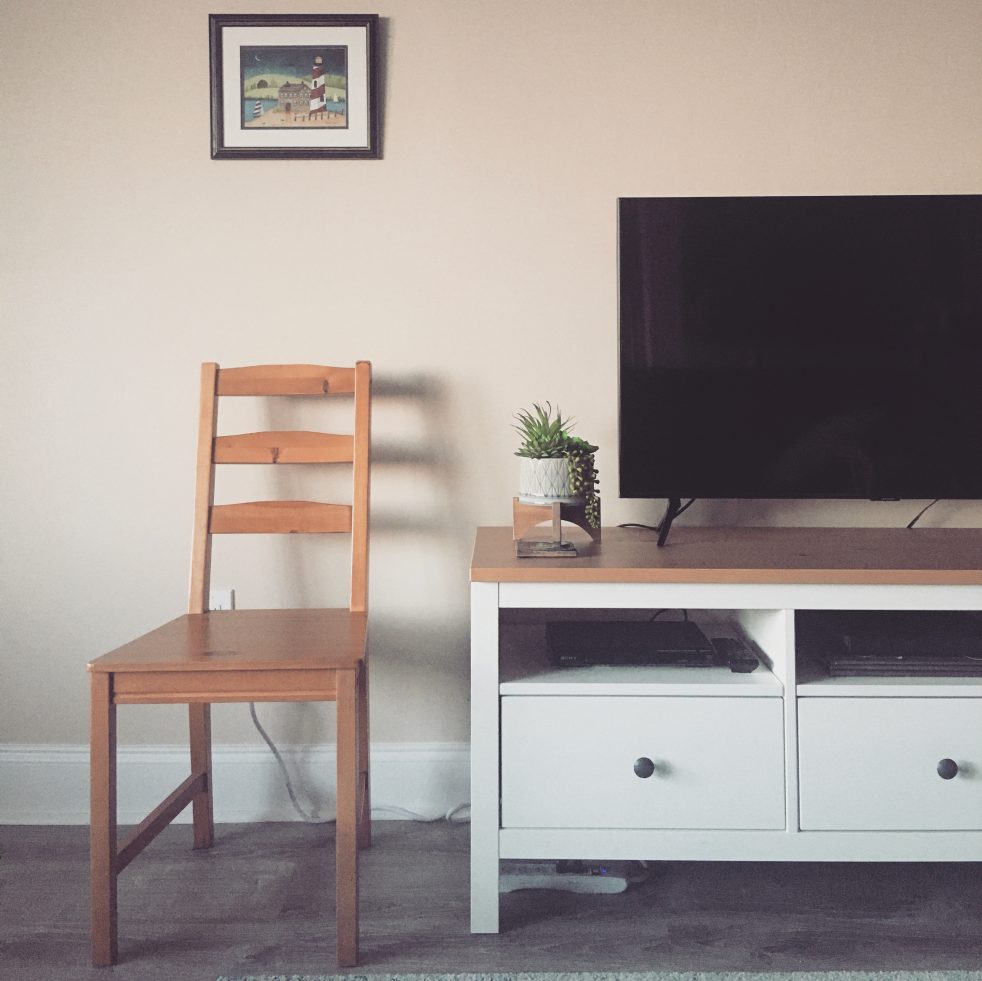
I think I’ll pay a visit to my DVD collection which has recently been minimized and organized to fit in the three drawers of our simple entertainment stand. Pulling out all three drawers, I can peruse my entire collection, nothing hiding from view. After glancing over the titles a couple of times, Jane Eyre (BBC 2006) keeps pulling me back. Having learned to listen to this sense of magnetism when it comes to selecting things, I pull out the box and pop disc one into the tray, anticipating my return visit to the mysterious Thornfield Hall and those who dwell there.

For some DVDs, I use the “scene selection” function to skip past the initial exposition of the story that I have grown familiar with and immediately go to the part of the story that initially captures my interest. For this particular DVD, I skip to the third scene selection option and settle in for some cozy viewing and tea sipping on the couch.

Movies are a great resource for creating atmosphere and escapism. They are portals into other times, places, cultures, and personal lives, and it is such a privilege to be an audience to stories that differ from my own setting and personal experience. As a minimalist, movies can also be a great way to quench the odd maximal craving, but I’ll save my thoughts on that for another time.

My desired atmosphere today, as mentioned above, is cozy (as it often is), and to me, cozy is evoked in images of chilly weather, dim lighting, warm firelight glow, hearty meals, rustic textures and prints, being safe inside, and friends gathering together to be embroiled in a mystery that they do not immediately realize is happening. I sit comfortably on my couch, a spectator enjoying my escape into Miss Eyre and Mr. Rochester’s story. I am happy to be at a safe distance so as not to experience the dangers that the mysterious plot has yet to unveil but that are clearly implied through the score’s delicate, minor piano notes and string bow strokes piercing the silence of the living room like the wandering gaze of an oil portrait in a haunted estate.

I’ll leave you with that image for now.

I cannot guarantee that the oil portrait’s gaze will leave you as easily…