I first finished reading Harry Potter and the Sorcerer’s Stone when I was ten years old. It was the summer of 2002 and I was in need of ways to escape the organized chaos that was The Work Family Connection day camp. I had seen the first Harry Potter movie in the theatre when it came out in the fall of 2001 and was mesmerized by the magical world of JK Rowling’s imagination, brought to life by the cast, crew, writers, and artists involved with the film. It was “movie magic” in its truest form and I absolutely loved it.
The Work Family Connection’s summer camp was located in the basement-level cafeteria of Southern Boulevard School. The cafeteria had waxed, linoleum, tiled floors, beige and blue cinderblock walls, and it was where WFC’s before-school program was held during the year. I had spent a lot of time there and made most of my friends, at the time, at WFC and have retained few of them, unfortunately, after we each grew up and went our separate ways.
Rather than gossip with my friends or ask (pester?) the counselors for their worldly advice about what it was like to be “adults”, for a few days I preferred to sit alone at one of the cafeteria tables with my book. I flipped open my paperback and allowed myself to be swallowed whole by Harry and his story. I disappeared into the fragrant pages of an enchanted world hidden amongst the very real-world places of London and the Scottish Highlands. With ease, the words blocked out the cacophony of Nok-Hockey sticks smacking against a particle board rink as well as the generally loud nature of pre-pubescents who each have something on the tip of their tongue that is absolutely the most important thing you will ever hear, no like seriously guys.
My parents had tried to read Harry Potter and the Sorcerer’s Stone to me and my sister when we were younger, but either I or Katie (or both) couldn’t make it past Fluffy, the three-headed dog, a Cerberusesque creature, who guards a dangerous place full of enchanted obstacles and secrets much too dangerous for children.
If you have read the beloved series or watched the movies, you will realize that I was very close to Harry’s age at the time of the story and that I would soon turn eleven. Eleven is a pivotal age in JK Rowling’s fictional universe as it is the age at which young witches and wizards receive their Hogwarts letter. I, however, remember being petrified of turning eleven.
When I was nine, two of my best friends at WFC aftercare were reading from an anthology of scary stories and stopped abruptly after reading one line in particular. When I asked why they stopped, they looked at me with grim expressions and showed me a sentence in the book. The sentence prophesied that people born on my birthday would die in eleven years. It seems silly now, of course, but when you are nine and your best friends believe something as serious as this, even if only for a moment, you entertain the possibility that it could be true. In fact, you believe it to be. I- being nine and gullible, wondered with dread if I’d bite the big one at eleven or at twenty. I imagine neither of these friends remembered this traumatizing “prophecy” past that day, when they read the words in the book, but in many ways, this experience shaped me.
Harry Potter distracted me from my looming eleventh birthday and was there for me with the wave of relief brought on by my twelfth, having lived to tell the tale. Harry, who had already lived ten years longer than he was supposed to, at the time of the first book, was an exception to the rule, and so too, would I be, (and probably most people born on my birthday, for that matter). Sometimes, I wish I could travel back to that moment and give that nine year old girl a huge hug and let her know she’s got so much more time than she thinks she has. Thirty-two would have been an absolute dream for her, but let’s hope for even more borrowed time than that.
In Harry Potter and the Chamber of Secrets, I visited the Weasley family’s bustling home, The Burrow, for the first time. Though book two is my least favorite of the series, due to the heavy lean on spiders in the storytelling, I fell in love with the Burrow and the Weasley family instantly. The Burrow is the epitome of lived-in cozy. It started as a small house and over the years, as Molly and Arthur Weasley’s brood grew to seven children, new levels, rooms, and towers were magically added here and there. It is a house filled with personality, color, hand-me-downs, squashy furniture, and imperfect perfection. There is a quote from the second movie that is not in my edition of the book, where Ron says, “It’s not much, but it’s home,” and yet, it is so much more than he thinks, something that Harry recognizes the instant he lays eyes on Ron’s unique family home.
I continued on my journey with Harry and his friends, tagging along like Neville Longbottom, wanting to fit in and be part of the crew. Once I was twelve, and out of the proverbial forbidden forest of my looming death prophecy, I could just be a kid again. I continued reading, Harry Potter and the Prisoner of Azkaban then Harry Potter and the Goblet of Fire. I got happily lost in these stories and met creatures I could never have dreamed up myself, a spectator to Harry and his friends’ exciting lives and challenges.
I went to a book release party for Harry Potter and the Order of the Phoenix at our local Borders (RIP!) with two friends and we went back to my friend Meagan’s house for a sleepover afterwards. I couldn’t put that massive blue hardcover down. Neither could my friends. It was the quietest sleepover in the history of sleepovers and we were all having the best time.
I bought my copy of Harry Potter and the Half Blood Prince in the summer of 2005, the day after saying goodbye to a boy I had met who I really liked and who I would not see again for five years, when the door was firmly closed and deadbolted. I delved into my new book that hot summer, in need of my friends in JK Rowling’s world. I found a haven in Harry’s world, despite the darkening tone of the story and the trials lying in wait for Harry and his friends as the books progressed. I am grateful for that green book at that time in my early teen years when I really needed something to disappear into.
I then had two years to wait for book seven, Harry Potter and the Deathly Hallows, to be released. My cousin and I speculated what would happen to Harry in the final book and who would survive what was to come in his magical universe. When I got that book, I think I finished it in two or three days, holed up in a squashy blue armchair with mugs of microwaved French Vanilla tea, wedged in the little reading nook between my parents’ dressers whenever their room in our apartment was available. I learned about horcruxes and rooted for Harry and the Order’s victory over darkness. I bore witness to Severus Snape’s most heartfelt motivations and saw Harry become a little more human in recognizing them too. It was thrilling and heartbreaking and everything I had hoped it would be and more. And when I reached the final page, I wanted to start the whole thing all over again, as I had done after finishing each book.
Throughout his years at Hogwarts and beyond, Harry faces many harrowing experiences and has a responsibility to be brave. Always in tow are his truest friends, Ron and Hermione, to help him through the toughest bits. The Harry Potter stories teach the importance of creating a support system for children, both through friendships and mentorships. They encourage children to be imaginative, brave, and adventurous. They succeeded in teaching me these lessons, for which I will always be grateful. I truly grew up with this series and it has been there for me through the trickier years in my life. As Albus Dumbledore says in Harry Potter and The Prisoner of Azkaban, “Happiness can be found even in the darkest of times, if only one remembers to turn on the light.” When you are feeling lost or sad, try opening a portal to another world in the pages of a book and take a look around for a while to see if you find treasure there, as I did.
Thank you for reading this long post. If a particular book has had a big impact on you, I’d love to hear about it. Leave me a comment, if you’d like to share and happy reading! 🙂
Growing up, I often had negative perceptions about my body and it took me a really long time to love the way that I look. I hate to admit it, but I still have negative body image perceptions sometimes, though much less frequently. An unexpected side effect of creating a more minimalist wardrobe was learning how to identify some of the triggers for these negative thoughts.
One of my big triggers is aspirational clothing lurking in my dresser or closet – those jeans that fit perfectly everywhere but are so tight in the waist that they inhibit digestion, that blouse that gaps in the front no matter how I safety pin it, or the halter dress that highlights my armpit squishies. I find myself thinking, if I only lost some weight, I could fit into these items comfortably and if I can fit into these items comfortably, then I will be beautiful; I will be enough.
What I have found the truth to be is that when I have lost the weight to be able to fit into aspirational clothing, it has only lasted temporarily and that for that temporary duration, I have been in a state of perpetual hangriness. Starving your way to aspirational clothing also means that all of your other clothes that you wear often and that make you feel good and beautiful would then be too big. Why sacrifice feeling good in a majority of your wardrobe just to feel good in a couple of items that drained so much of your self-worth for so long? Get those items out of sight. The trade off makes no sense to me now and I only wish I had realized it sooner.
When I come across aspirational clothing in my closet, it takes guts to confront the bully hidden in the waistline, zipper, or buttons down the front. I find that I allow my aspirational clothing to put me down for a while before I even notice that it is draining positivity from my daily routine of getting dressed. Once I realize, I work past the guilt of the purchase or the time that it has spent in my dresser or closet, and recognize that I have learned a valuable lesson from it about what does not support my body and mindset well. Then, I confront the item and the emotions attached and oust it to the donation pile. Good riddance!
As a teenager, cultural representations of beauty really fucked with my self esteem. I used to collect Vogue magazine and thought that being beautiful meant being stick thin. My body doesn’t get stick thin. I’m not proud to say it, but I tried very hard to test and disprove this theory. I remember an influential quote of Kate Moss’ from when I was a teenager, “Nothing tastes as good as skinny feels,” and now, to that, I say, have you tried the Lindt 78% dark chocolate yet? It tastes better than skinny feels, to me.
I started learning to love my body in college when I was studying art. I took a life drawing class my senior year which involved drawing nude models. These models came in all shapes, sizes, colors, ages, and genders. At the end of class, we would walk around the studio to look at the interpretations of the model and it was fascinating to see the variance in the drawings from easel to easel.
Some students drew the models with ideal proportions and some drawings were more abstract, despite us all having learned how to establish proportions and perspective from life to paper. I learned to see the human body as marks on paper, as shapes, shadow, light, and negative space. Even more fascinating was how most of the models seemed completely comfortable wearing nothing, standing on a platform in the middle of a circle of easels and watchful eyes. There was no judgement in the art studio. There simply was no time for it when the professor quickly increased the time of the different poses from thirty-seconds to two-minutes to ten-minutes and on to twenty. The body became scratches of charcoal or pencil on paper and together, those scratches created something beautiful and unique.
My pared down wardrobe has taught me what I enjoy wearing and how my clothes can impact my mood and mental health. When I open my closet, I see color, texture, patterns, prints, and shine. I smile when I get dressed in the morning because I know that my closet it mostly full of clothes that support me in being the best version of myself for whatever that means today. And when I come across something that does not serve that basic function, I thank it for the lesson and say goodbye.
There is no perfect body type. Beauty comes in an endless variety of forms and your form is included in that spectrum; I am absolutely certain of this. If you are struggling with negative body image, you are not alone, and it can feel impossible to feel like you are beautiful and enough, but know that you are. It is difficult to accept others telling you that you are beautiful until you are able to embrace it yourself.
Aim to be healthy, not just measured by a number on a scale, but in a way that supports your mental health too. And for the love of all that is good in this world, do it for yourself and your loved ones and try not to let the bullies of social media, pop-culture, or your aspirational clothing dictate what is enough.
Last summer, while visiting Portland, Maine over the Fourth of July holiday, we went with some friends to a beach in another coastal town nearby called Cape Elizabeth. It was a warm day, though not sweltering, but the shimmering water still looked inviting and we were determined to swim.
We abandoned our beach towels and coverups and approached the water with the knowledge that it would probably be cold. Reality hit with a frostbiting splash with the first steps into the waves. I thought of children by the beach in our shore town back home and of kids we’ve seen on vacation who, determined to jump into the pool first thing in the breezy mornings, would drag their less than excited parents to the poolside to participate and supervise and it made me wonder if discomfort is a learned behavior rather than an innate one.
How is it that a baby by the ocean can be so eager to continue splashing in the shallows even after that first icy touch? In that moment, I wanted a share of that sense of freedom and uninhibitedness, so I held my breath and dove into the crest of an oncoming wave. Submerged and compressed by the cold pressure under the surface, the water invigorated me, stunning my nerves, smoothing my skin, and spreading my hair out behind me.
Breaking through the surface, I gulped the July, Maine air, blood rushing back to my face, cheeks too hot despite the breeze on my chilled skin outside the water. A baby giggled and squealed in the shallows, eager to stay at the edge, daring and alive and oh so happy.
After that trip, I began to will myself to be like a baby by the ocean whenever I was faced with a difficult, but necessary situation. The words became a mantra that helped me through some challenging situations this year and I continue to find myself thinking of them.
The unknown can be frightening, but it was not always that way. The fear develops from the context of our experiences as we grow. Babies seem to approach the unknown with curiosity rather than fear and I envy that in them. I want to stand on the verge of an ocean of possibility, propelled by an insatiable curiosity for the future. I will abandon fear with my beach towel on the sand, excited to dive into foamy crests and come alive no matter how biting the water may be. I can follow the sun, break through the surface, and gulp in the air when I must.
And if you look closely from the shore, you will see me shine and the tide will change. The waves will pull, rise, and crest and I will follow. And for it all, I will be different when we meet again.
My mind is a deconsecrated cathedral turned into hipster apartments full of whimsy, mismatched decor, and white-washed walls.
The Madonna weeps over a modern record player with the Abbey Road B-side scratching on repeat in a studio kitchen,
Majestic in her broken panes of stained glass, cemented together with black composite.
She is beautiful and her suffering-an art.
She is womanhood and childhood and loss.
Taken for granted,
Rent-stabilized cost of losing a savior
for location location location.
The stations of the cross taken down,
Their shadows left behind beneath un-frescoed white walls to make room for mass-produced art from Target.
My creativity, removed from its sepulcher during construction, is haunting the rooms, evicting the mundane tenants who are satisfied with the status quo.
The times they are a changin’,
Rearranging priorities and preferences,
The colors-more vibrant, the words-more bold.
I write on the walls with lipstick and crayon, like Harold in his purple world
With a grown-up twist.
Unformed and malleable,
Full of possibility and light,
I grow and glow.
I illuminate past the confines of the bulbs in the IKEA pendant fixtures,
A mixture of grace and insanity come to life in a way that finally pulls the room together.
Free to curate slowly with care,
My soul revived with abundant self-worth and self-love,
Absolutely enough
and ready to take on the neighborhood market – Upscale and laid back with an unbeatable view of the future.
I grip my grasp on happiness with a firm hold,
finally bold
And recognize that “can” is a word in my vocabulary again.
Survival does not depend on compromising on dreams and
I began to minimize my faith in religion back in 2012. It was a very confusing and draining time in my life, brought on by my great aunt’s losing battle with pancreatic cancer a year earlier.
After her death, I was not the same person and I felt the cavity of her absence to my core. In attempts to be happy again, I talked to Mike almost every day, despite living in different cities. I watched dozens of DVDs from my university’s library, escaping into Singin’ in the Rain, Finding Neverland, and Ever After, to name a few. I bottled up my grief – wrote stories and essays about loss for class assignments, and pulled myself up from piles of blankets and sweatshirts on my dorm room bed. I took a trip to Florida and met Mike’s aunt and uncle for the first time and they took us to Disney World. It all helped a little, bit by bit, but I still felt lost. I prayed to God and to my aunt each night, longing to be heard. I cried till my nose grew raw with the salt of grief each time there was no response, and after a year – I stopped praying all together.
I slowly came to terms with an understanding that she was gone permanently and I that couldn’t talk with her anymore, only to her memory. I rationalized the unlikelihood that there was really a heaven, to the point where such a concept did not make sense to me anymore. I began to view Jesus as a good, self-sacrificing, historical figure who lived by contagious ethical values and began to realize that his mother, Mary, may have just been a young girl, newly married, and uneducated in matters of sexuality.
I began to stumble across my aunt in dreams, but she was different – not the person I had known. Something was always off about her. I’d be dreaming that I was walking around the corner in our family shore house and happen upon her standing there, wordless, in the middle of the kitchen, lit only by the bulb inside the refrigerator, her back to me. She never spoke to me in these early dreams. She was child-like, but looked even older than she did just before she died. She seemed happy in the dreams, but always with an air of infantile innocence about her, as though she were a newborn old person.
To not be able to speak with her was painful, and to fear her was worse, because at the time, all I needed to know was that she was still there if I needed her, that I could somehow break through the curtain between the realm of the dead and the living. I just didn’t know how yet.
I gained more of an interest in the science of the how the universe works and an appreciation for quantum theory a few years later, recognizing in them new ways to describe what I once called faith. I marveled in the idea that most of the elements in human bodies were formed in stars and gained an appreciation for the existence of humanity as we know it. I grew fascinated by the concept of time and how it works differently in the vastness of space than on Earth. At one point, I felt overwhelmingly small and helpless, a miniscule person, afraid, on a miniscule rock in an infinite stretch of something my brain will never fully comprehend. I learned about energy, the duality of electrons, and Schroedinger’s theory and wondered how many versions of each of us exist in infinite alternate realities, if at all. I wondered if my aunt was still alive in one. Or if I was dead in another. I began to appreciate my reality more and was fascinated by the mystery and possibility of it all. I started to feel comfortable with the unknown again. I still feel small, but also part of it all, and not alone. I am but one compilation of star matter trying to make sense of dark matter(s) and accepting that it’s ok if I can’t.
I have been casually thinking about further minimizing my use of social media and quitting Facebook for over a year now, but I did not seriously consider deleting my account until November of 2022 while visiting a friend in California. We sat in a dive bar in Venice at some late hour of the eastern pacific night, drinking pints of beer and spilling about life.
“I’m thinking of getting rid of Facebook,” I said too loudly with fortified, liquid confidence.
“Yeah; you and everybody’s parents are the only people who still use it,” my friend joked bluntly.
While factually untrue, it did make me recognize how many of my friends no longer use Facebook as a social platform. I felt like a searchlight had locked on me, shining a harsh blue exposure up from beneath my chin, preparing me for some on-the-fly campfire story that I wasn’t even sort of ready to tell. Sitting in that high-top, busted-pleather, half-booth in Venice, my feet dangling above the sticky floor, the seed of an idea germinated and I knew with certainty that someday I would extricate myself from social media’s entangled roots. Two days ago, I finally felt ready to approach that “Delete Account” button, knowing that it was the right move for me.
I prepared for my departure as I saw fit. I wrote down birthdays. I notified my Facebook community of when I would leave the platform, giving family and friends the opportunity to reach out if they wanted to keep in touch. Most importantly, to me, I saved pictures from my account and Mike’s, revisiting old memories that I’d not looked at in years. With my memories harvested and stored away, I felt ready to continue on my journey and leave Facebook behind.
I pulled up the login screen four times on Wednesday, without thinking about it, and it became clear to me that this might be a tough withdrawal process. Social media caused a lot of easy access to distraction for me and I finally felt it was time to fight off that distraction to pursue creative hobbies and make time for healthier physical and mental practices.
Wednesday morning before work, instead of scrolling through my Newsfeed while mindlessly chomping on my cereal, I sat in a chair by the window and watched the sun rise out of pink clouds over the Atlantic, enjoying each crunchy bite. This morning, I felt inspired to do some writing on this post which I have been struggling with for the past couple of days. Already, I am feeling more grounded in my own life. I am happening upon inspiration during times when I would not have noticed it or pursued it due to scrolling on social media, and I am feeling the wispy roots of my creativity beginning to take hold again.
For years, I nourished a carefully edited portrayal of life for an audience of friends, family, and people I’d avoid on the street. I had grown like a flowering vine, clinging to my wall, not easily torn away. But now it is winter with spring in sight, and I am ready for sprays of wildflowers to bloom again.
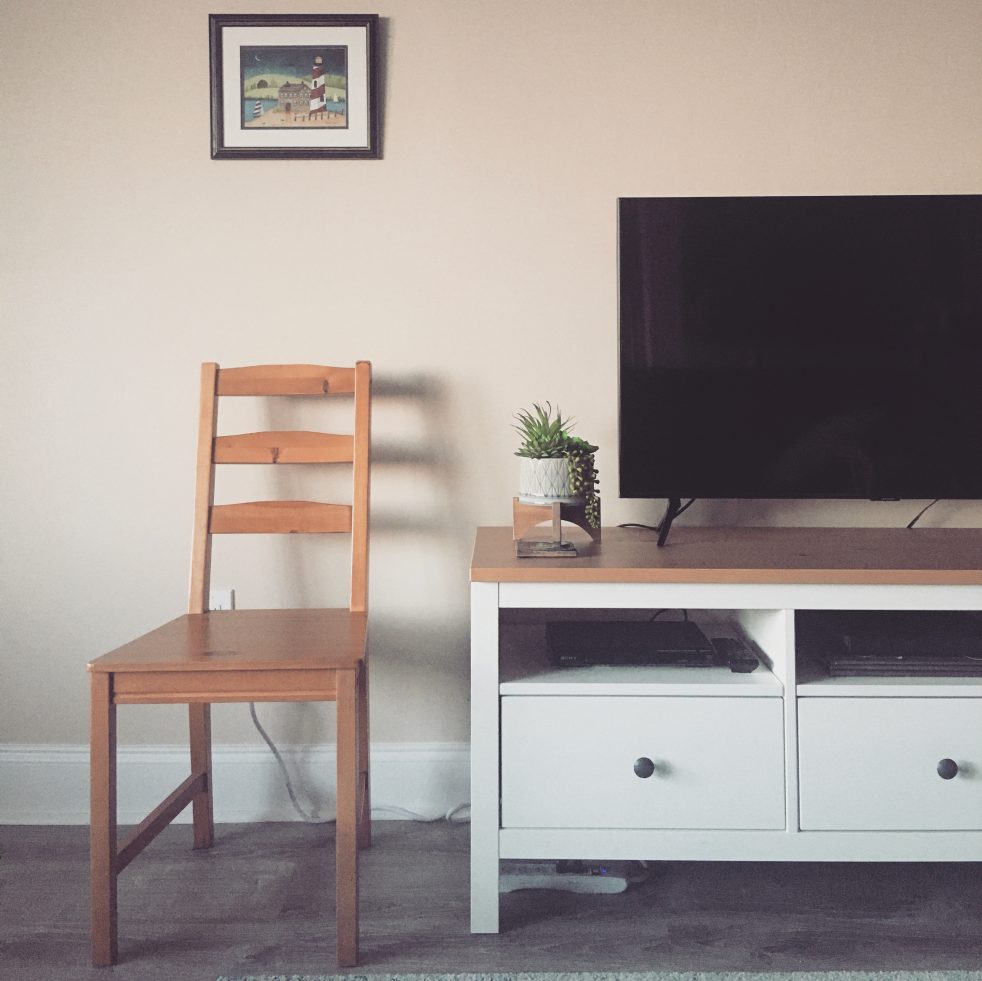


 cozy does it